近期文章
- Wholesale Second Hand Clothes in Sierra Leone | KingAAA
- Wholesale Used Clothes Suppliers: 5 Trusted Exporters Compared
- World Cup and Second-Hand Clothing: 3 Incredible Stories Behind Vintage Football Jerseys
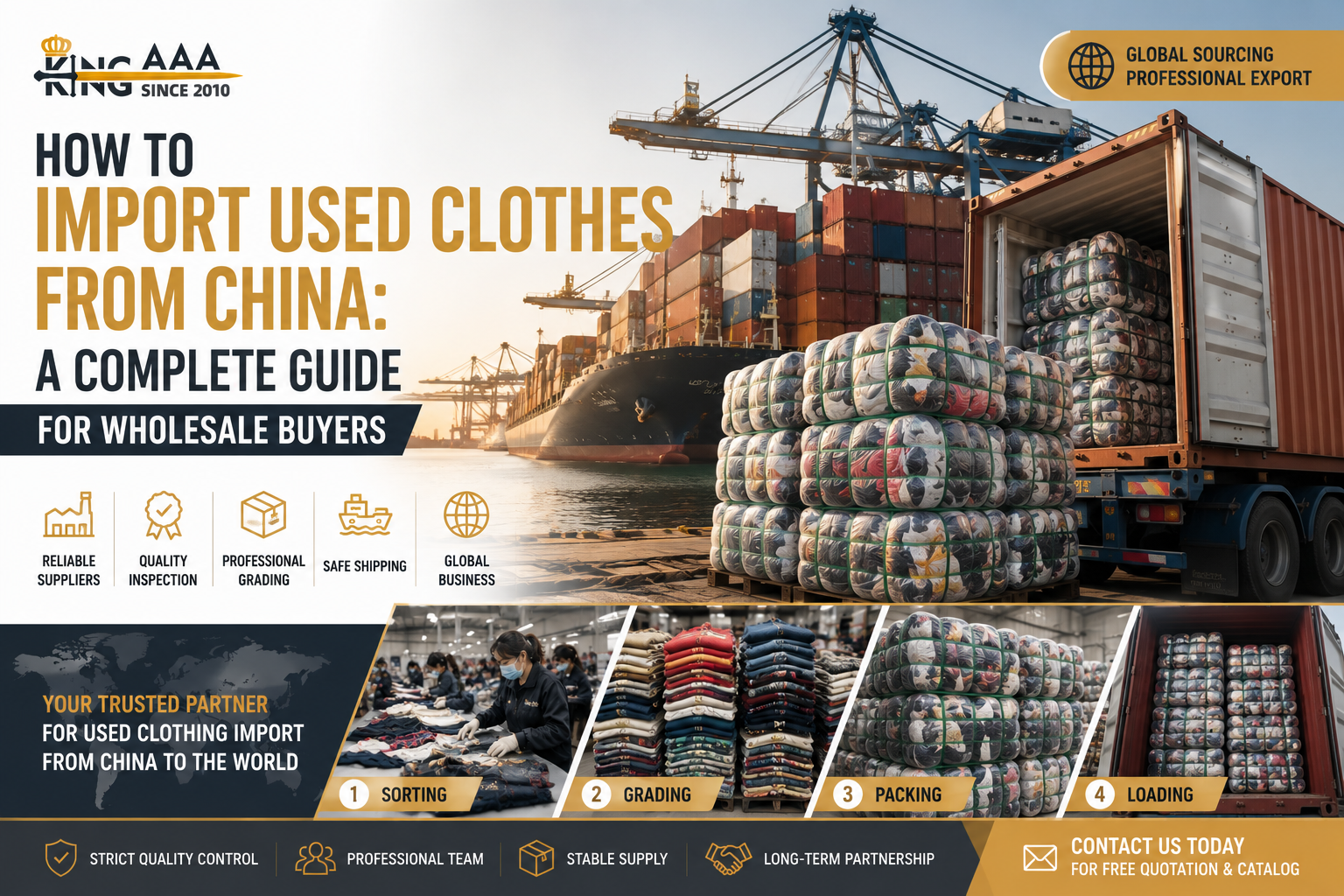
- How to Import Used Clothes from China: A Complete Guide for Wholesale Buyers
- How to Choose a Reliable Used Clothing Supplier for Your Wholesale Business
分类
Wholesale Used Clothes Suppliers: 5 Trusted Exporters Compared
- By 2379957994@qq.com
- 未分类
What Bulk Buyers Should Check Before Choosing a Supplier
The wholesale used clothes trade runs on a simple idea: second hand clothing is collected, sorted, graded and pressed into bales, then sold by weight or by container to buyers who resell it in their own markets. Two suppliers can quote a similar price per bale and still deliver very different goods, because the sorting standard behind the bale is what decides your resale margin.
Before you commit to a supplier, it helps to compare four things:
- Sorting and grading capacity, since this sets how consistent each bale will be.
- Product mix, because the categories a supplier collects determine whether you get the items your customers actually buy.
- Export volume, which shows whether the supplier can hold a schedule when you scale up.
- Destination experience, so you know they have shipped to your region before.
The five companies below are established exporters in this trade. The details are the ones stated on their own pages and profiles, so treat them as a starting point for your own due diligence rather than a substitute for it.
Kungfu KingAAA — Guangzhou, China
Kungfu KingAAA has been exporting used clothes since 2010 and describes itself as a wholesale exporter rather than a general trading company.
- Location: Guangzhou, China
- Business type: supplier and exporter
- Main products: used clothes, used shoes, used bags
- Facility: a 30,000 square metre factory
- Workforce: about 1,000 employees
- Product range: more than 200 product lines
- Monthly shipping volume: up to 200 containers
- Markets served: 120 or more countries and regions
- Daily throughput: roughly 350,000 kg of used clothes, with around 15 containers filtered and shipped each day
The company positions its output as colourful, fashionable and consistently sized, which is the pitch most buyers hear from Chinese exporters competing on sorting quality rather than on price alone.
H&O Recycling Limited — United Kingdom
H&O Recycling Limited is based in South Wales and is a family-owned company. It states seven years of activity in the used clothing wholesale business and works with second hand wholesale partners plus a mixed customer base in the UK and abroad.
- Location: South Wales, United Kingdom
- Business type: supplier
- Main products: used clothes, used shoes, used bags
- Grades offered: cream and Grade A
- Categories: men’s and women’s coats, children’s used toys, towels, curtains and other second hand items
- Sourcing approach: the company collects and recycles higher quality used clothing and controls its incoming material
Being UK based is the practical advantage here. Buyers who want short shipping times into European or West African routes often prefer a European collection point over a longer sea leg from Asia.
GEBETEX Tri Normandie — France
GEBETEX Tri Normandie is a European second hand clothing exporter with its head office in Vernon, France.
- Location: Vernon, France
- Business type: supplier and exporter
- Main products: used clothes, used shoes, used bags
- Sorting team: 20 people
- Equipment: 10 tablet presses used to grade and classify incoming material
- Output: up to 4,000 tonnes of graded used clothing per month
- Delivery: the company handles delivery to the agreed destination and exports to buyers on several continents
For volume buyers in Europe, the sorting team and pressing equipment are the parts worth asking about, because they set how tightly the grades are held across a large monthly tonnage.
DODO — China
DODO supplies second hand clothing to businesses and states 14 years in the industry. It works through its own factories in China and a wider network of partner factories.
- Location: China
- Business type: supplier
- Main products: used clothes, used shoes, used bags
- Experience: 14 years in used clothing supply
- Capacity: more than 200 production lines
- Sourcing network: self-built factories in China plus partnerships with over 10,000 cooperative factories
- Daily throughput: around 350,000 kg of used clothes and close to 15 containers shipped per day
The network model means buyers can usually ask for a tailored product mix rather than accepting whatever a single sorting line happens to produce that week.
FILEKS AS — Norway
FILEKS AS was founded in 2015 and supplies used clothing and fabrics into the wholesale second hand trade. The company focuses on building a steady supply chain for businesses that manage used clothing operations.
- Location: Norway
- Business type: supplier
- Founded: 2015
- Main products: used clothes, used shoes, used bags, fabrics
- Grades offered: cream and Grade A
- Categories: used clothing for adults and children, plus shoes and bags
If your customers mainly buy coats, knitwear or other heavier items, ask FILEKS AS for the current category mix before placing an order. The product mix matters more than the supplier’s location.
How to Evaluate Any Supplier on This List
The fastest way to reduce risk is to ask the same questions of every supplier and compare the answers side by side.
- Ask exactly how they define their grades, and request the written standard they sort to.
- Request recent photos or a sample bale of the specific grade you intend to buy.
- Confirm the minimum order, which in this trade is usually expressed per container rather than per item.
- Ask which destinations they have shipped to most often, and what documents they can provide.
- Confirm current lead time, loading schedule and who arranges freight.
- Check that the categories in the mix match what your own customers buy.
Choosing Between Them
There is no single best supplier here, only the one that fits your route and your buyers.
- Buyers who need large monthly tonnage and a wide product range usually compare the Chinese exporters first.
- Buyers who want shorter shipping legs into Europe or Africa usually start with the UK and French suppliers.
- Buyers who prefer Nordic collected outerwear and knitwear usually look at the Norwegian supplier.
- Buyers testing a new market usually order one container, resell it, then decide whether to scale with the same supplier or test a second one.
What are wholesale used clothes?
Wholesale used clothes are second hand garments that have been collected, sorted, graded and pressed into bales, then sold in bulk by weight or by container. Buyers resell them through their own shops, markets or export channels. The price you pay per bale reflects the grade, the product mix and how tightly the supplier sorts.
What do the grades mean, such as cream and Grade A?
Grade A and cream are common terms in the used clothing export trade and generally refer to better sorted material with fewer unsellable items. The definitions are not standardised across the industry, so two suppliers can both sell cream grade and still deliver different quality. Always ask each supplier for their own written grading standard and a sample of the exact grade you are buying.
What is the minimum order?
Most suppliers in this trade work in container volumes, so a single 20 foot or 40 foot container is a common starting point rather than a fixed rule. Minimum order sizes vary by supplier, grade and destination, so confirm the current minimum directly before planning a purchase.
How long does shipping take?
Delivery time depends on your destination, the port, the supplier’s production schedule and the shipping line used. Ask each supplier for a current lead time and loading date rather than relying on a general figure, because schedules change through the year.
How can I check quality before placing a full order?
Ask for recent photographs of the specific grade, a sample bale where available, and details of where the raw material is collected from. Buyers who can visit a sorting facility usually do so before committing to regular volumes. A single container trial order is the most common way to test a new supplier.
Which of these suppliers suits a small buyer?
The smaller-scale option is usually to start with a single container from whichever supplier offers the product mix closest to your buyers, then scale once the resale results are known. Suppliers with both own factories and partner networks tend to be more flexible on mix, while European suppliers often suit buyers who prioritise a shorter shipping route over the widest possible range.