近期文章
- Top Dubai Used Clothing Factory & Wholesale Suppliers (2026)
- Wholesale Second Hand Clothes in Sierra Leone Guide (2026)
- Top Suppliers of Second-Hand Shoes in Johannesburg (2026)
- Used Clothes Suppliers from London: Top 7 UK Wholesale Guide (2026)
- Wholesale Used Clothes Suppliers: 5 Trusted Exporters Compared
分类
How to Choose a Reliable Used Clothing Supplier for Your Wholesale Business
- By D, Allen
- 未分类
Introduction
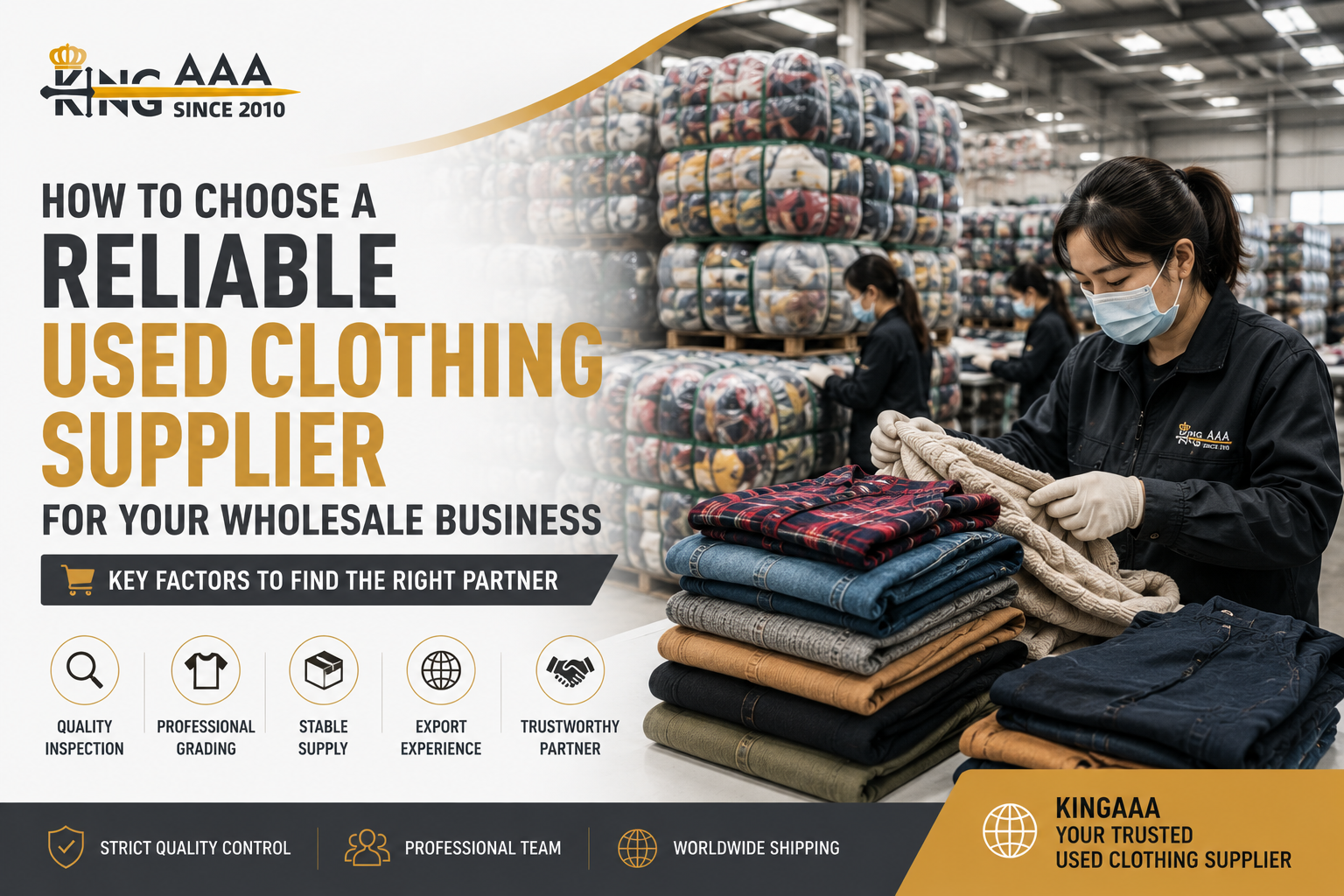
Finding the right used clothing supplier is one of the most important decisions for wholesalers, retailers, and importers. Product quality, stable supply, professional grading, and reliable shipping all directly affect your business success.
With thousands of suppliers available worldwide, choosing the right partner can be challenging. A trustworthy supplier not only delivers quality products but also helps reduce business risks, improve customer satisfaction, and increase long-term profitability.
This guide explains the key factors every buyer should consider before selecting a wholesale used clothing supplier.
Why Choosing the Right Used Clothing Supplier Matters
Not all suppliers provide the same level of quality or service. Some focus only on low prices, while experienced exporters prioritize quality control, consistent grading, and reliable delivery.
Working with a professional used clothing supplier offers several advantages:
- Consistent clothing quality
- Stable inventory and supply capacity
- Professional grading standards
- Lower return rates
- Faster international shipping
- Long-term business cooperation
For importers, choosing the right supplier often determines whether customers place repeat orders.
Evaluate the Supplier’s Quality Inspection Process
Quality inspection should always be your first priority.
Professional suppliers inspect every batch before packing to remove damaged, heavily worn, or unsuitable garments. This ensures buyers receive products that meet agreed quality standards.
Ask suppliers questions such as:
- How many inspection stages are there?
- Are clothes manually sorted?
- Do they provide grading reports?
- Can they share factory inspection photos or videos?
A transparent inspection process demonstrates professionalism and builds trust.
Understand Their Clothing Grading Standards
Grading is one of the biggest differences between suppliers.
A reliable used clothing supplier separates clothing into different quality levels based on cleanliness, condition, style, and seasonal demand.
Common categories include:
- Cream Quality
- Grade A
- Grade B
- Mixed Clothing
- Summer Clothing
- Winter Clothing
Clear grading standards help buyers match products with their local market and reduce customer complaints.
Check Production Capacity and Export Experience
A supplier with modern facilities and stable production capacity is better equipped to handle large wholesale orders.
Before placing an order, ask about:
- Monthly supply capacity
- Number of workers
- Factory size
- Export countries
- Loading capacity
- Container lead time
Experienced exporters usually understand customs documentation, container optimization, and international shipping requirements, helping buyers avoid unnecessary delays.
Compare Price with Overall Value
Price should never be the only deciding factor.
Extremely low prices often indicate lower-quality products or inconsistent grading. Instead, evaluate the supplier based on the overall value they provide, including product quality, service, delivery reliability, and communication.
A long-term partnership with a dependable supplier often generates greater profits than choosing the cheapest option.
Conclusion
Selecting the right used clothing supplier is essential for building a successful wholesale business. By evaluating quality inspection, grading standards, production capacity, export experience, and overall value, buyers can minimize risks and establish reliable long-term partnerships.
At KingAAA, we combine strict quality inspection, professional grading, stable monthly supply, and worldwide export experience to help customers grow their businesses with confidence.
Similar Posts

Wholesale Second Hand Clothes in Sierra Leone Guide (2026)
2026 年 9 月 29 日
Top Suppliers of Second-Hand Shoes in Johannesburg (2026)
2026 年 9 月 29 日