Chile Second-Hand Clothing is one of the fastest-growing import categories in South America—but in 2025, the rules have changed. It’s no longer just about “how to clear customs,” but about “how to manage responsibility after selling.”
If you are planning to export Chile Second-Hand Clothing such as clothes, shoes, or bags, this guide is for you. We will break down Chile’s latest EPR system (Extended Producer Responsibility), customs requirements, taxes, quality standards, and explain why high-quality sourcing from China (such as KingAAA Used Clothes) is becoming a key competitive advantage under the new policy environment.
Table of Contents
1. Chile Second-Hand Clothing Market Overview
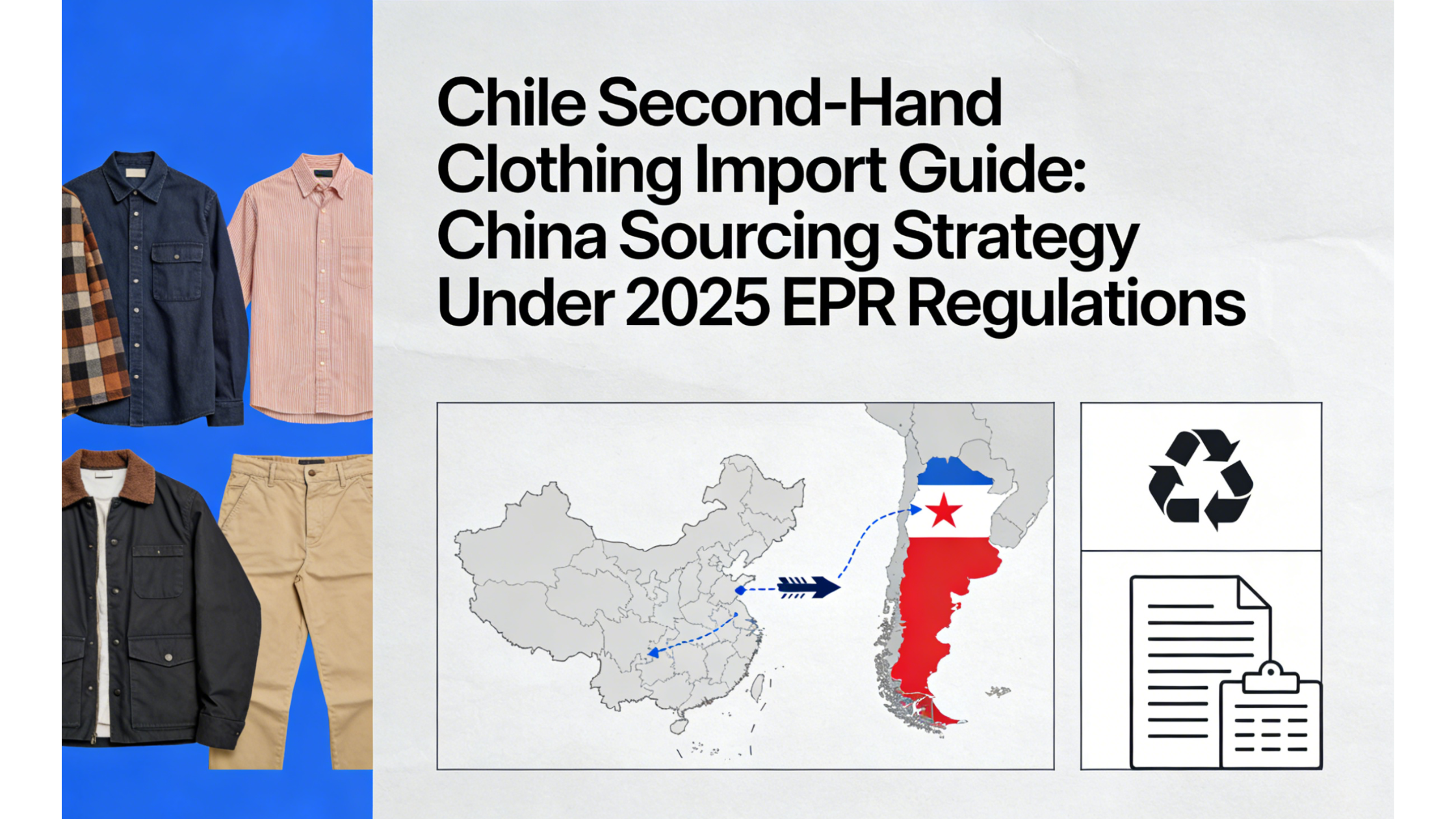
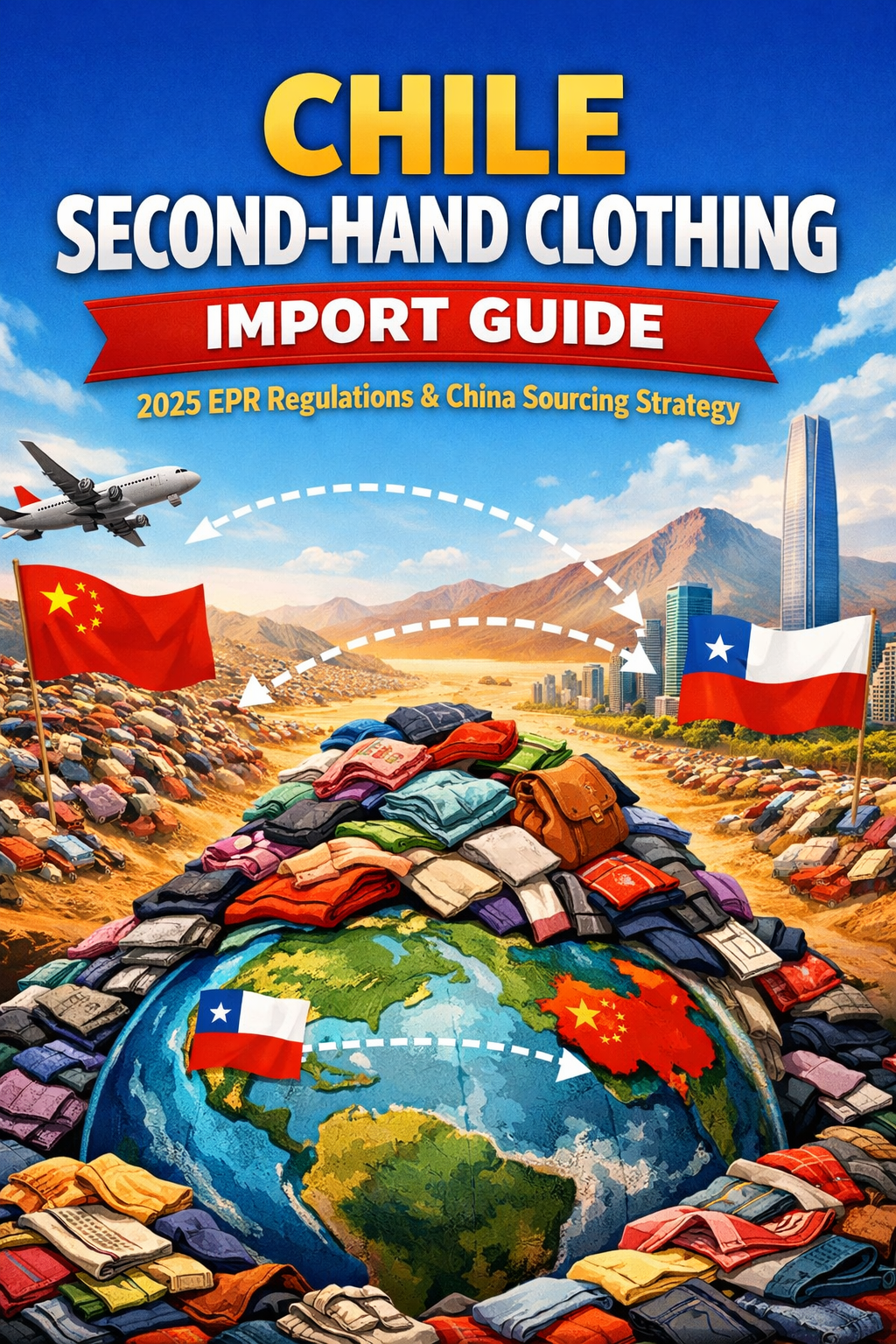
Chile Second-Hand Clothing is one of the most important import categories in South America, with Chile ranking as the fourth-largest importer of second-hand clothing globally. The country imports over 126,000 tons annually, mainly from China, the United States, and Europe.
Most Chile Second-Hand Clothing shipments pass through the Iquique Free Trade Zone (ZOFRI) before being distributed across Chile and neighboring countries such as Peru and Bolivia.
However, environmental pressure is increasing due to textile waste accumulation in the Atacama Desert, which has triggered major policy reforms.
2. Key Change in Chile Second-Hand Clothing: EPR System & Textile Regulation (⚠️ Most Important)
What is Chile Second-Hand Clothing EPR regulation?
In June 2025, Chile officially classified textiles under the REP Law (Extended Producer Responsibility Law).
For Chile Second-Hand Clothing importers, this means:
Anyone placing Chile Second-Hand Clothing on the market is responsible for its end-of-life impact.
Impact on Chile Second-Hand Clothing importers
As an importer of Chile Second-Hand Clothing, you may need to:
- Register under the PRTR system (Ministry of Environment)
- Report annual Chile Second-Hand Clothing import volumes
- Prepare for future recycling obligations (expected before 2029)
Why Chile regulates Second-Hand Clothing
The Chile Second-Hand Clothing market generates massive waste. Over 126,000 tons enter Chile annually, and a large portion becomes landfill waste in the Atacama Desert.
The government aims to reduce low-quality Chile Second-Hand Clothing imports and push toward sustainable circular economy practices.
💡 Strategy for Chile Second-Hand Clothing sourcing
When sourcing Chile Second-Hand Clothing from China, prioritize quality over quantity. Low-grade goods will become future liability costs.
🧢 Recommended: KingAAA Used Clothes provides high-quality Chile Second-Hand Clothing supply with 90% near-new grading standards and standardized production systems
3. Chile Second-Hand Clothing Customs Clearance & Documentation Requirements
Importing Chile Second-Hand Clothing requires strict documentation:
| Document Type | Requirement |
|---|---|
| Basic Documents | Invoice, packing list, bill of lading, FORM F certificate |
| Sanitary Certificate | Fumigation/disinfection required for Chile Second-Hand Clothing |
| Spanish Labeling | Required for all Chile Second-Hand Clothing products |
| Animal Material Declaration | Applies to leather-based Chile Second-Hand Clothing items |
| EPR Registration | Future requirement for Chile Second-Hand Clothing importers |
4. Chile Second-Hand Clothing Tax Structure & Cost Breakdown
Tax structure for Chile Second-Hand Clothing imports:
| FOB Value | Customs Duty | VAT | Other Fees |
|---|---|---|---|
| ≤ $30 | Exempt | 19% | None |
| > $30 | 0–6% | 19% | 1% grading fee |
Key insight for Chile Second-Hand Clothing
- FORM F reduces tariffs to 0% under FTA
- VAT (19%) always applies
- Simplified tax rules apply to low-value Chile Second-Hand Clothing shipments
5. Chile Second-Hand Clothing Sanitary & Quality Requirements
Quality control is critical for Chile Second-Hand Clothing:
- Must be clean and odor-free
- No mold or biological contamination
- No soil, seeds, or animal residue
- Low-quality Chile Second-Hand Clothing may be rejected or disposed of
📊 Market data shows that up to 73% of imported Chile Second-Hand Clothing was unsold in ports in previous years, often becoming waste.
6. Supplier Selection for Chile Second-Hand Clothing: Why KingAAA Is an Ideal Partner
Choosing the right supplier for Chile Second-Hand Clothing is critical under the new regulations.
6.1 Large-scale Chile Second-Hand Clothing production system
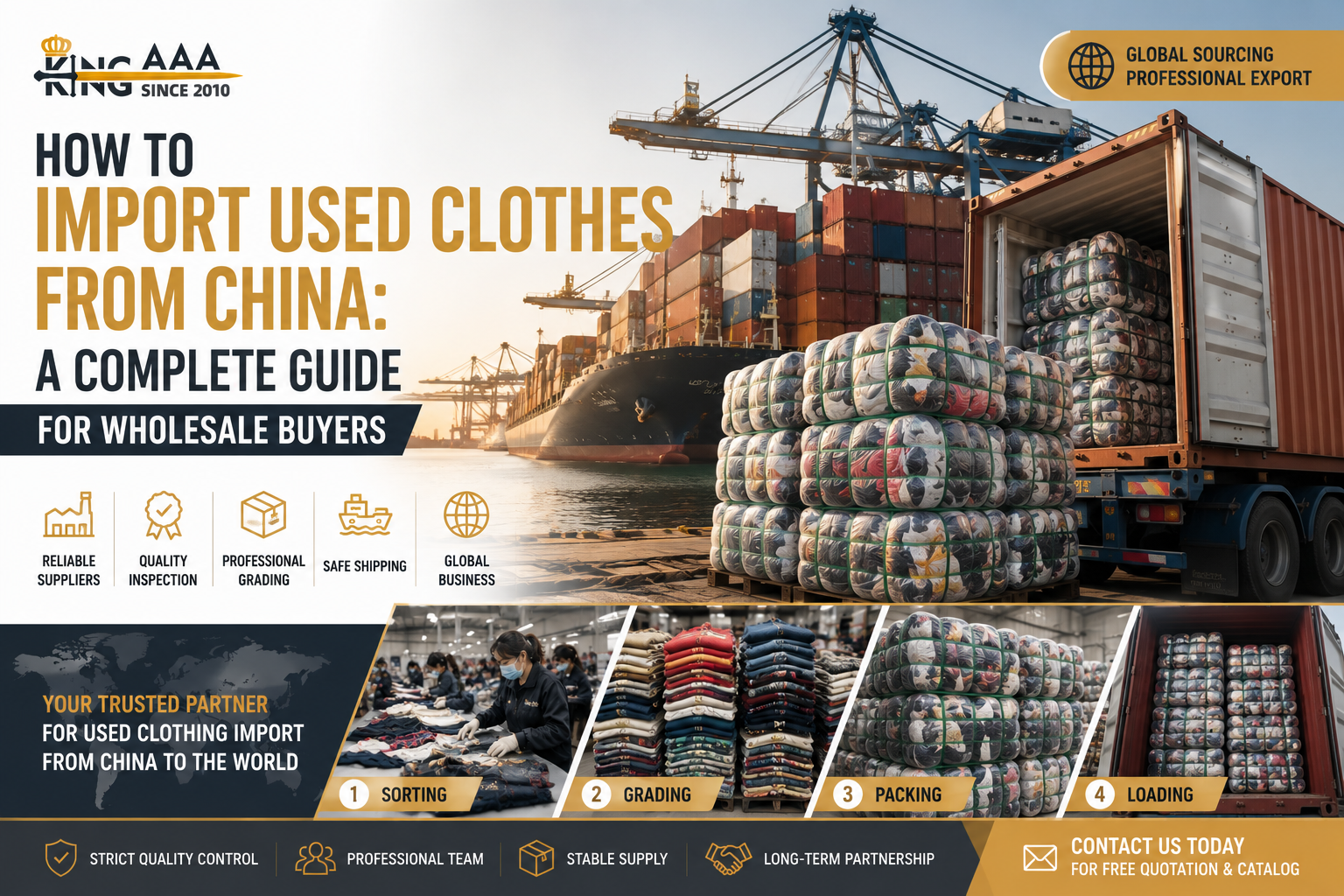
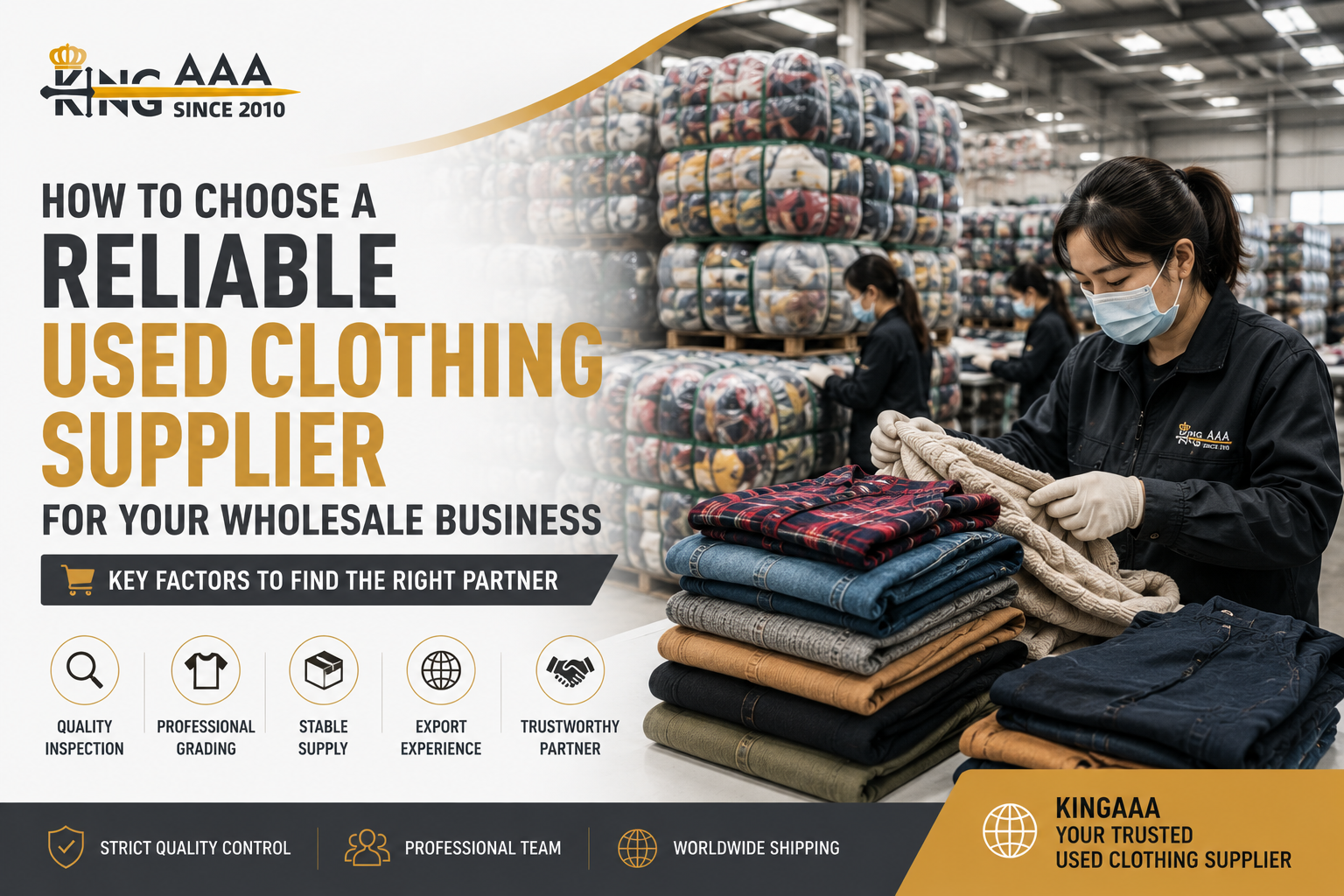
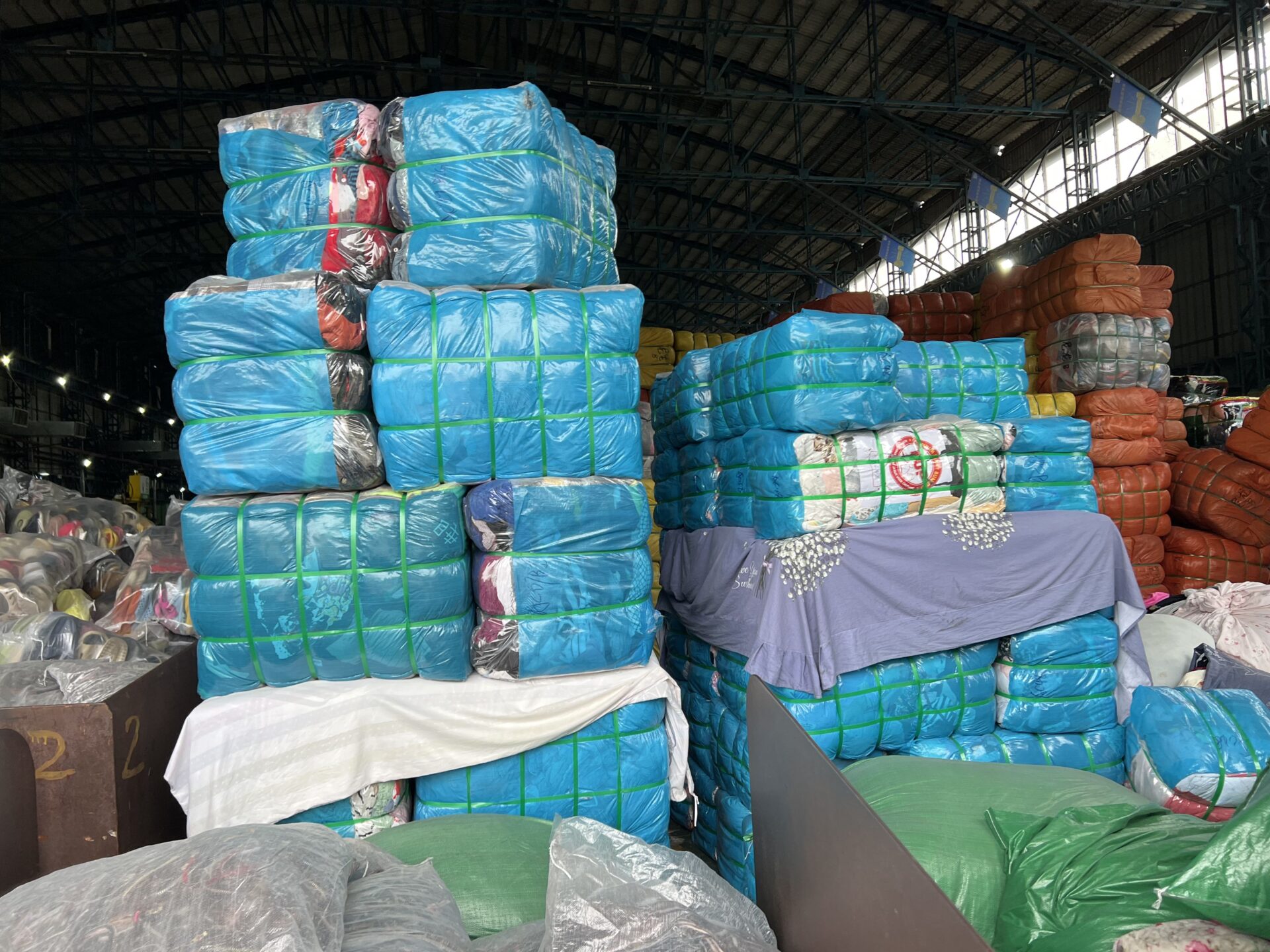
KingAAA operates a standardized sorting system for Chile Second-Hand Clothing with high-volume processing and strict grading control.
6.2 Chile Second-Hand Clothing sourced from top Chinese cities
All Chile Second-Hand Clothing inventory comes from:
- Guangzhou
- Shenzhen
- Shanghai
- Beijing
- Chongqing
- Chengdu
This ensures higher brand quality and fashion relevance.
6.3 A-grade Chile Second-Hand Clothing standard (90% new)
A-grade Chile Second-Hand Clothing must meet:
- Near-new condition (90%+)
- No visible defects
- Fully functional accessories
- Clean and ready-to-sell appearance
6.4 Quality control for Chile Second-Hand Clothing
| Stage | Control Process |
|---|---|
| Incoming check | Batch sampling |
| Sorting | Remove defective Chile Second-Hand Clothing |
| Grading | A/B/C classification |
| Re-check | Random inspection |
| Final QA | Pre-shipment verification |
6.5 Industry recognition in Chile Second-Hand Clothing sector
KingAAA is among the few Chinese suppliers recognized for standardized Chile Second-Hand Clothing processing and media coverage at national level.
7. Conclusion: Old vs New Rules in Chile Second-Hand Clothing Market
| Dimension | Traditional Chile Second-Hand Clothing Trade | 2025 New System |
|---|---|---|
| Policy | Customs-focused | EPR + environmental responsibility |
| Cost | Tariff + VAT | Future recycling & compliance cost |
| Quality | Basic hygiene | High-grade Chile Second-Hand Clothing required |
| Market trend | Price-driven | Sustainability-driven |
8,Final Thoughts
The Chile Second-Hand Clothing market is still growing—but the rules have fundamentally changed.
Success is no longer about shipping volume, but about quality, compliance, and sustainability.
Suppliers like KingAAA Used Clothes can help you stay competitive by providing high-grade Chile Second-Hand Clothing that aligns with future regulations.
If you’re a retail buyer looking to purchase a few items for yourself, I recommend checking out Vinted.
Feel free to contact us via WhatsApp:+86 13316091422 —we’re always here to answer your questions about purchasing secondhand clothing.