Choosing the right supplier is one of the most important decisions in the second-hand clothing business.
Many buyers enter the market with strong demand and good sales channels — but still lose money due to poor-quality supply.
That’s why understanding how to choose a used clothing supplier is essential for long-term success.
Table of Contents
Why Your Supplier Determines Your Profit
In this industry, your supplier controls:
- Product quality
- Sell-through rate
- Waste ratio
- Customer satisfaction
Even if your prices are competitive, low-quality inventory will reduce your profits.
This is why learning how to choose a used clothing supplier is not optional — it is critical.
The Biggest Risk — Low-Quality Mixed Bales
One of the most common problems buyers face is inconsistent quality.
Many suppliers mix:
- Wearable items
- Damaged clothing
- Unsellable waste
This creates uncertainty and turns every shipment into a gamble.
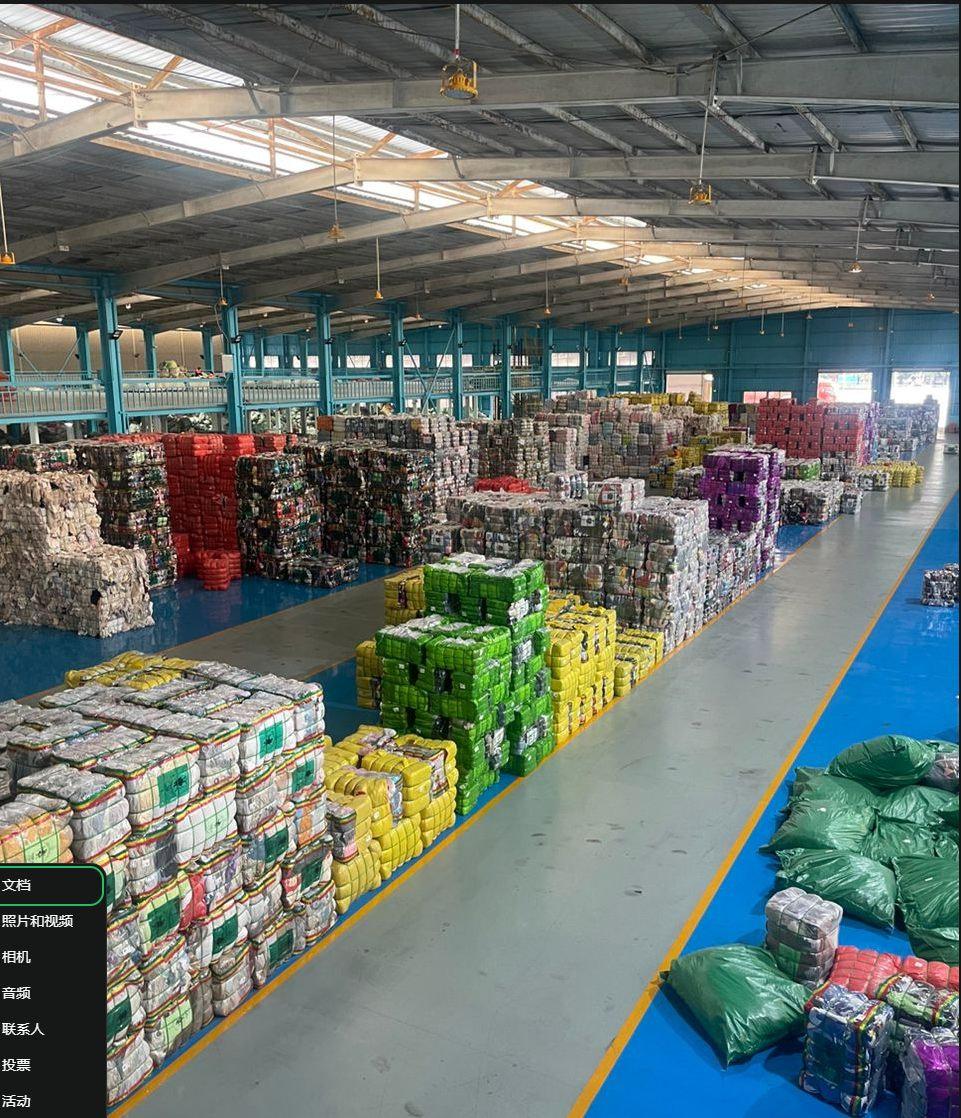
7 Key Factors When Choosing a Used Clothing Supplier
1. Clear Grading System
A professional supplier must offer a transparent grading system:
- A-grade
- B-grade
- Reject/Waste
Without clear grading, quality cannot be controlled.
2. Consistent Quality Across Shipments
Consistency matters more than one good batch.
Ask:
- Is quality stable over time?
- Are grading standards maintained?
3. Sorting Process Transparency
Reliable suppliers should explain:
- How items are selected
- How defects are filtered
- How categories are defined
4. Disinfection and Certificatio
For international trade, hygiene standards are critical.
A professional supplier should provide:
- Disinfection proof
- Export documentation
- Compliance certificates
5. High Sell-Through Rate
This is the most important indicator.
👉 Not all clothing is valuable — only what can be sold
Ask suppliers:
- What percentage is wearable?
- What is the expected resale ratio?
6. Experience in Export Markets
Suppliers with global experience understand:
- Market preferences
- Import requirements
- Logistics challenges
7. Sample Testing Before Bulk Orders
Always request sample bales before committing to large orders.
This helps you evaluate:
- Real quality
- Sorting accuracy
- Business compatibility
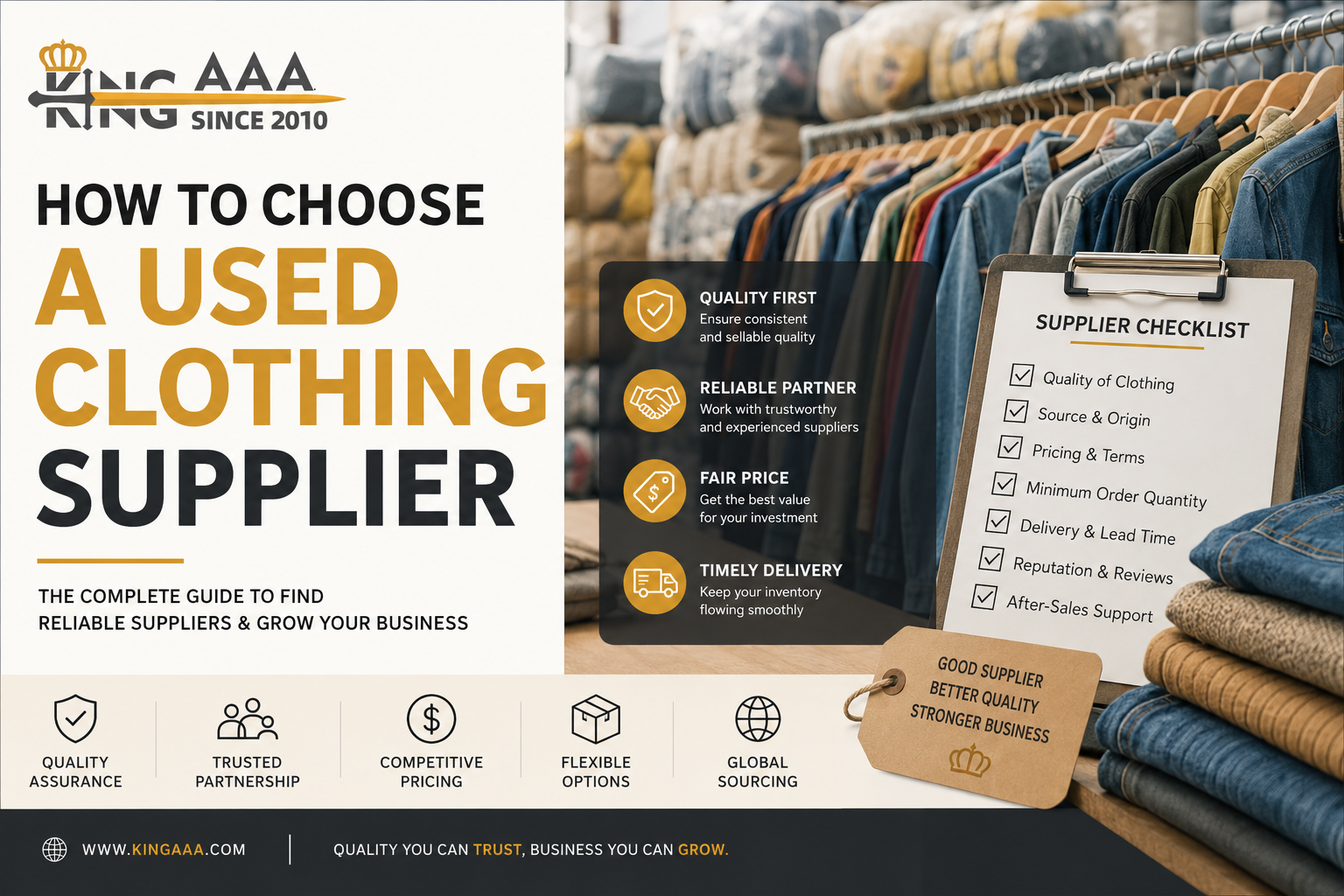
Supplier Checklist (Quick Evaluation Tool)
Before choosing a supplier, confirm:
- Clear grading system ✅
- Stable quality consistency ✅
- Proper disinfection process ✅
- Export experience ✅
- Positive market feedback ✅
This checklist simplifies how to choose a used clothing supplier into actionable steps.
Why Professional Suppliers Make a Differenc
Working with experienced exporters like KingAAA helps buyers:
- Reduce waste risk
- Improve inventory quality
- Achieve higher resale margins
- Build a more stable business
Instead of relying on luck, you gain control over your supply chain.
Common Mistakes Buyers Should Avoid
Many buyers make the same mistakes:
- Choosing based only on price
- Ignoring grading standards
- Skipping sample testing
- Working with unverified suppliers
Avoiding these mistakes is essential when learning how to choose a used clothing supplier.
Final Thoughts
Choosing a supplier is not just a purchasing decision — it is a business strategy.
👉 Final takeaway:
A good supplier doesn’t just sell you products — they protect your profitability.
👉how to choose a used clothing supplier,clik to contest us
Our YouTube:https://www.youtube.com/@KungfuKingAAAUsedClothes
👉If you’ve learned how to choose a used clothing supplier and want to learn more about how to start a secondhand clothing business, check out this post.(blog:How to Start a Profitable Second Hand Clothing Business)