Table of Contents
- Quick Takeaways: FOCAC Policy Dividends & Textile Trade
- How FOCAC Beijing Summit Reshaped China-Africa Apparel Supply Chains
- 100% Zero-Tariff Access & Green Customs Clearance Corridors
- Sourcing Economics: Cost per Sellable Item vs. Middleman Bales
- 40ft HQ Container Planning & Tropical Bale Specifications Table
- Major African Destination Ports & Landlocked Transit Corridors
- 5-Stage Pre-Shipment Sorting & International Quarantine Compliance
- Dual-Track Sourcing for African Wholesalers: Trial Bales vs. Full Containers
- Frequently Asked Questions (FAQ)
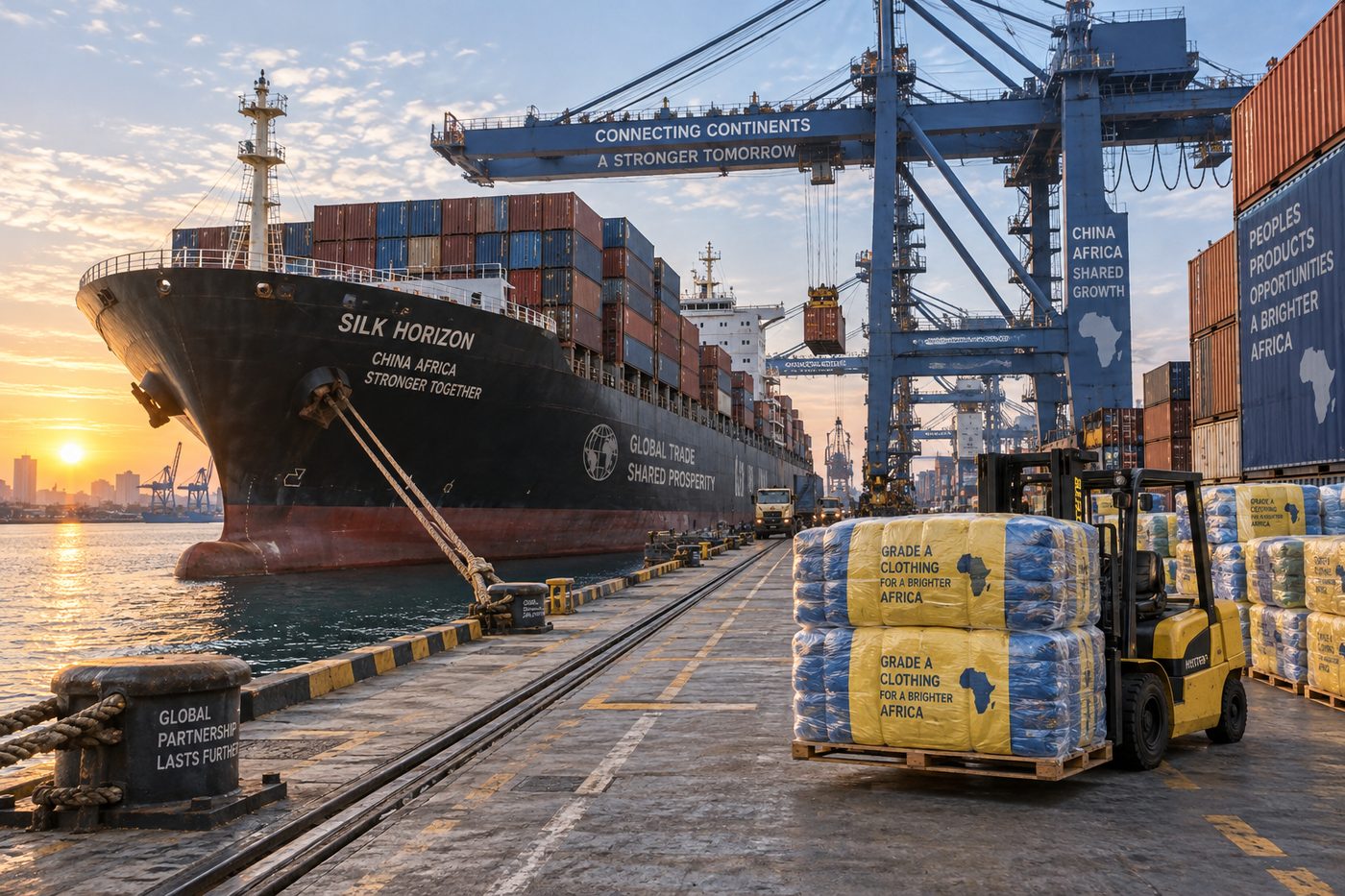
The landmark 2024 Beijing Summit of the Forum on China-Africa Cooperation (FOCAC) marked a historic transformation in bilateral commerce, creating unprecedented opportunities across the china-africa second hand clothing trade for African importers, wholesalers, and market distributors.
Within the china-africa second hand clothing trade, second-hand clothing and footwear represent one of the most vital consumer commodity sectors across Sub-Saharan Africa, serving over 75% of the population in major markets such as Nigeria, Kenya, Ghana, Côte d’Ivoire, Tanzania, Angola, and Burkina Faso. With China solidifying its position as the world’s leading exporter of premium pre-owned garments, the policy frameworks established at FOCAC—including zero-tariff market access for 33 least developed African countries, simplified customs declarations, and enhanced maritime logistics—provide direct commercial advantages for businesses sourcing from top Chinese export manufacturers.
1. Quick Takeaways: FOCAC Policy Dividends & Textile Trade
- 100% Tariff-Free Treatment: China’s unilateral commitment to grant 100% tariff-free treatment on taxable items to all 33 least developed African nations with diplomatic ties significantly reduces bilateral administrative friction.
- Direct Guangzhou Super-Factory Sourcing: Bypassing intermediary trading agents in overseas bonded zones and procuring directly from KingAAA’s 20,000 m² Guangzhou facility reduces landed container costs by 30%–50%.
- 100% Tropical Climate Sorting: Sourcing from tier-1 Chinese metropolises (Guangzhou, Shenzhen, Shanghai) guarantees lightweight cotton T-shirts, breathable dresses, and children’s wear with <1% defect rate, perfectly matched to Africa’s tropical climate.
- Container-Optimized Logistics: Calibrated high-density hydraulic baling allows up to 28.5–29.0 metric tons (650+ bales) in a single 40ft HQ container, minimizing sea freight cost per kilogram across West, East, and Southern African ports.
2. How FOCAC Reshaped the China-Africa Second Hand Clothing Trade Supply Chains
The Beijing Summit brought together leaders from 51 African nations, the African Union, and the United Nations under the theme of “Joining Hands to Promote Modernization and Build a High-Level China-Africa Community with a Shared Future in the New Era.”
Beyond high-level diplomatic milestones, the summit established ten partnership action plans over the next three years, with Trade Prosperity and Green Sustainable Development at the core. The circular textile economy—transforming post-consumer garments from China’s rapidly growing consumer economy into high-utility apparel for African consumer markets—embodies the practical essence of China-Africa mutual economic complementarity.
Chinese urban consumers now refresh their wardrobes seasonally, generating vast volumes of lightly worn, high-quality garments from modern fabric blends. For African entrepreneurs in the china-africa second hand clothing trade, this dynamic provides a steady, year-round supply of fashionable, pristine Grade A inventory.
3. 100% Zero-Tariff Access & Green Customs Clearance Corridors
Under the FOCAC Action Plan (2025–2027), trade facilitation measures between China and African customs administrations have been substantially upgraded:
- Authorized Economic Operator (AEO) Mutual Recognition: Direct green lanes for accredited Chinese export factories streamline export declarations at Nansha, Yantian, and Ningbo ports.
- Standardized Quarantine & Fumigation Protocols: Bilateral agreements ensure that official fumigation, health inspection, and disinfection certificates issued in China are recognized immediately by African port authorities.
- Digital Customs Declarations: Streamlined electronic bills of lading (B/L) and digitized packing lists eliminate clearance delays at major transit hubs.
4. Sourcing Economics: Cost per Sellable Item vs. Middleman Bales
In wholesale markets like Kantamanto in Accra, Gikomba in Nairobi, Balogun in Lagos, and Rood Woko in Ouagadougou, successful importers know that profitability is never determined by nominal bale price, but by the Cost per Sellable Grade A Garment.
⚠️ The Secondary Baling Risk: Bales purchased through third-party intermediaries frequently suffer from “cream stripping” (where high-end branded items are removed) and “weight stuffing” (where 15%–20% of the bale consists of torn rags or heavy winter items). Direct factory sourcing from KingAAA guarantees unstripped, 100% pure Grade A sorting.
| Sourcing Benchmark | Direct KingAAA Guangzhou Factory | Traditional Intermediary / Trader |
|---|---|---|
| Raw Material Collection | 100% Tier-1 Chinese Metropolises (Guangzhou, Shenzhen, Shanghai) | Mixed regional collections / Unverified third-tier origins |
| Defect & Waste Rate | < 1% (5-stage manual quality inspection) | 15% – 25% (Holes, stains, unwearable pieces) |
| Sizing & Fashion Alignment | Modern slim/standard cuts (S, M, L) suited to African body profiles | Oversized (2XL–4XL) or outdated vintage cuts |
| Packaging & Custom Branding | 45/55/80/100kg hydraulic bales in colored poly-wrap; custom logo on demand | Generic unbranded or damaged bags |
| Average Wholesaler ROI | 60% – 85% Net Return | 25% – 35% Net Return |
5. China-Africa Second Hand Clothing Trade Container Specifications & Bale Table
Importers scaling their volume in the china-africa second hand clothing trade rely on calibrated container loading plans. Below are the standard export specifications for our top-performing African categories:
| Code | Category Description | Standard Bale Weight | Approx. Pieces / Bale | Top Regional Destination Demand |
|---|---|---|---|---|
| TS-01 | Men’s Round-Neck & Polo T-Shirts | 100 kg / 45 kg | 480 – 520 pcs / 100kg | Nigeria, Ghana, Kenya, Côte d’Ivoire |
| DR-02 | Ladies’ Tropical Silk & Cotton Dresses | 100 kg / 45 kg | 380 – 420 pcs / 100kg | Benin, Togo, Cameroon, Burkina Faso |
| KD-03 | Children’s Summer Wear (0–12 Yrs) | 100 kg / 45 kg | 700 – 850 pcs / 100kg | All African markets (Highest piece count) |
| JN-04 | Men’s & Ladies’ Light Tropical Jeans | 100 kg / 55 kg | 160 – 190 pcs / 100kg | South Africa, Angola, DR Congo |
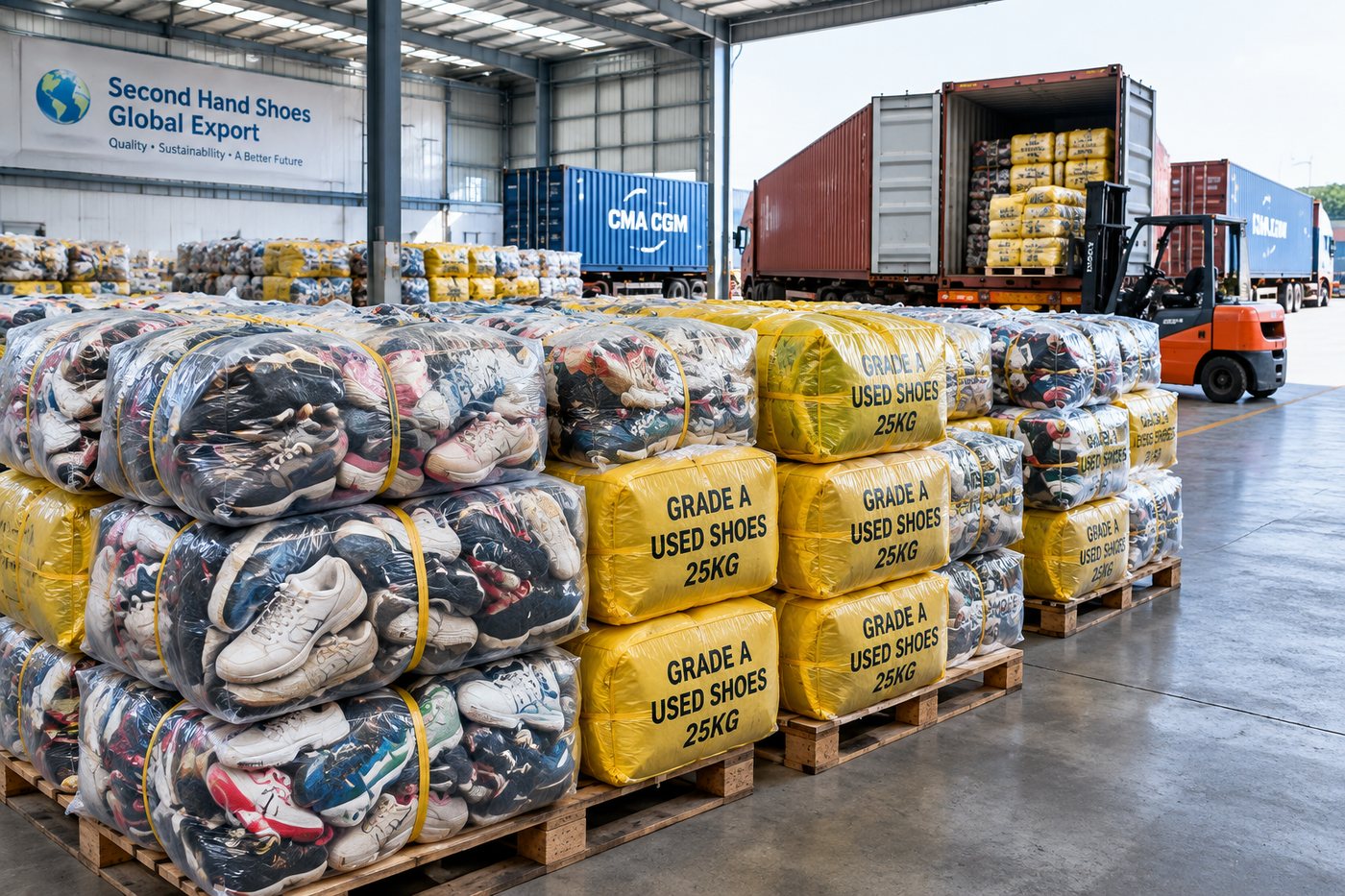
| SH-01 | Grade A Second Hand Shoes & Sneakers | 25 kg Sack | 35 – 40 pairs / 25kg | High-margin addition in mixed containers |
| BG-02 | Grade A Sorted Used Bags & Backpacks | 45 kg Sack | 80 – 100 pcs / 45kg | School bags, fashion handbags, travel bags |
6. Major African Destination Ports & Landlocked Transit Corridors
KingAAA manages direct ocean freight bookings from Nansha, Shekou, and Ningbo ports to all key African maritime gateways with average ocean transit times between 25 and 38 days:
- West Africa Gateway Ports: Lagos (Apapa/Tin Can, Nigeria), Abidjan (Côte d’Ivoire), Tema (Ghana), Lomé (Togo), Cotonou (Benin), Dakar (Senegal).
- East Africa Gateway Ports: Mombasa (Kenya), Dar es Salaam (Tanzania), Port Sudan (Sudan), Djibouti Port (Djibouti & Ethiopia).
- Southern & Central Africa Ports: Durban & Cape Town (South Africa), Luanda (Angola), Douala (Cameroon), Pointe-Noire (Congo).
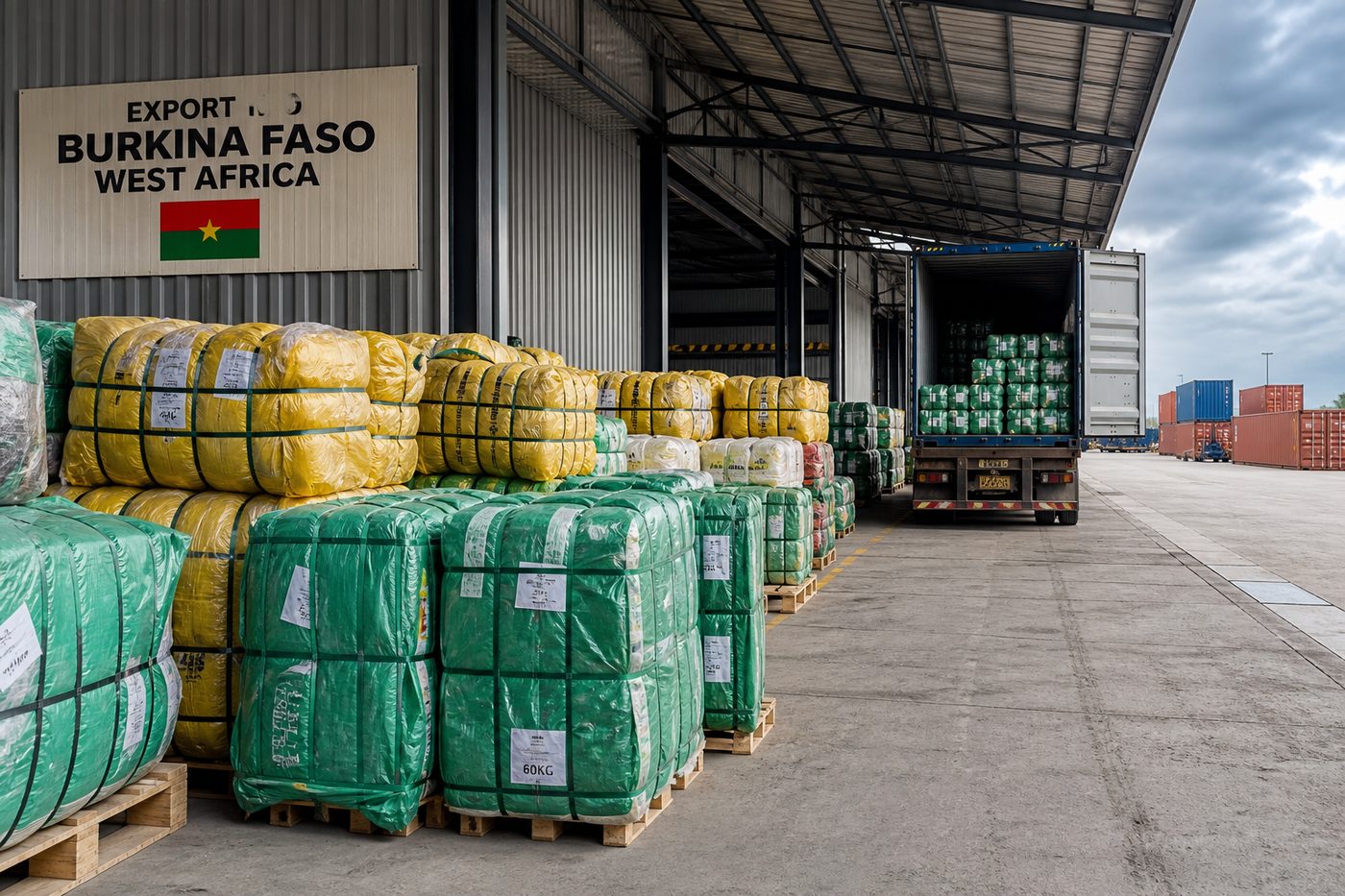
- Landlocked Country Corridors: Transit documentation and bonded road transport to Ouagadougou (Burkina Faso), Bamako (Mali), Niamey (Niger), Kigali (Rwanda), Kampala (Uganda), and Lusaka (Zambia).
7. 5-Stage Pre-Shipment Sorting & International Quarantine Compliance
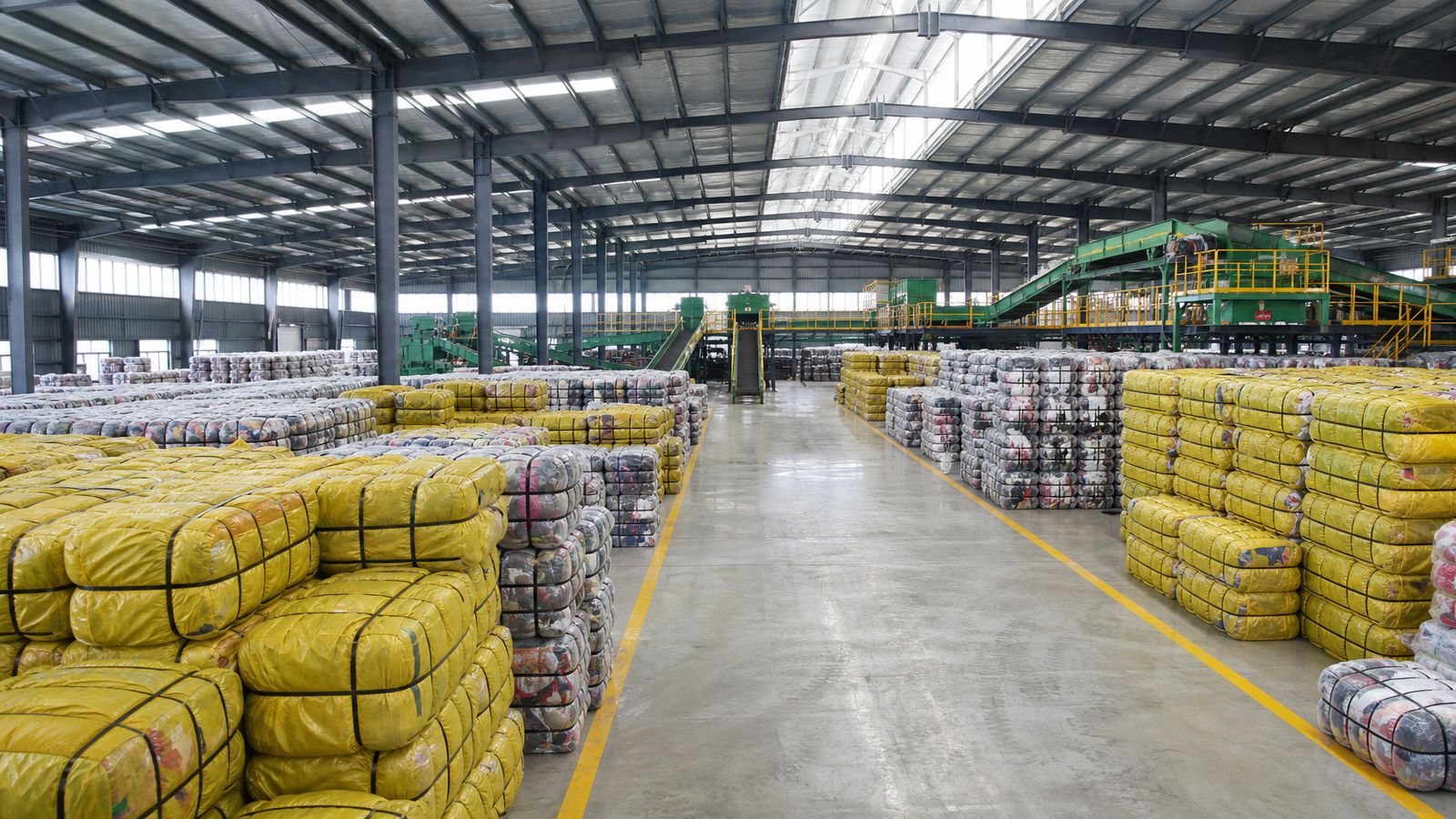
Every bale exported by KingAAA undergoes a rigorous 5-stage sorting line in our Guangzhou facility, backed by complete international documentation:
Verified Quality Control & Official Customs Documentation
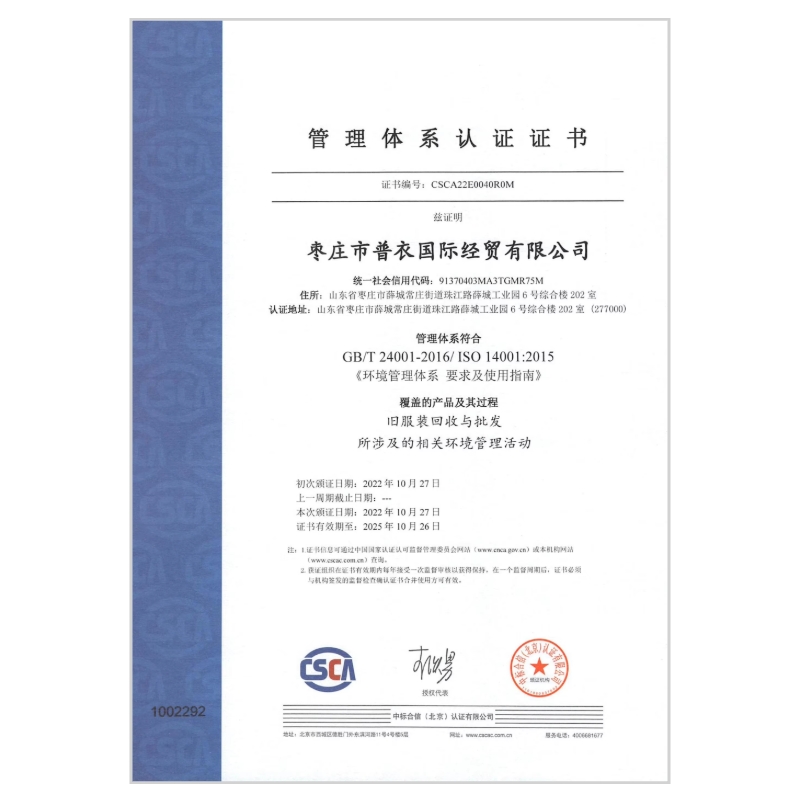
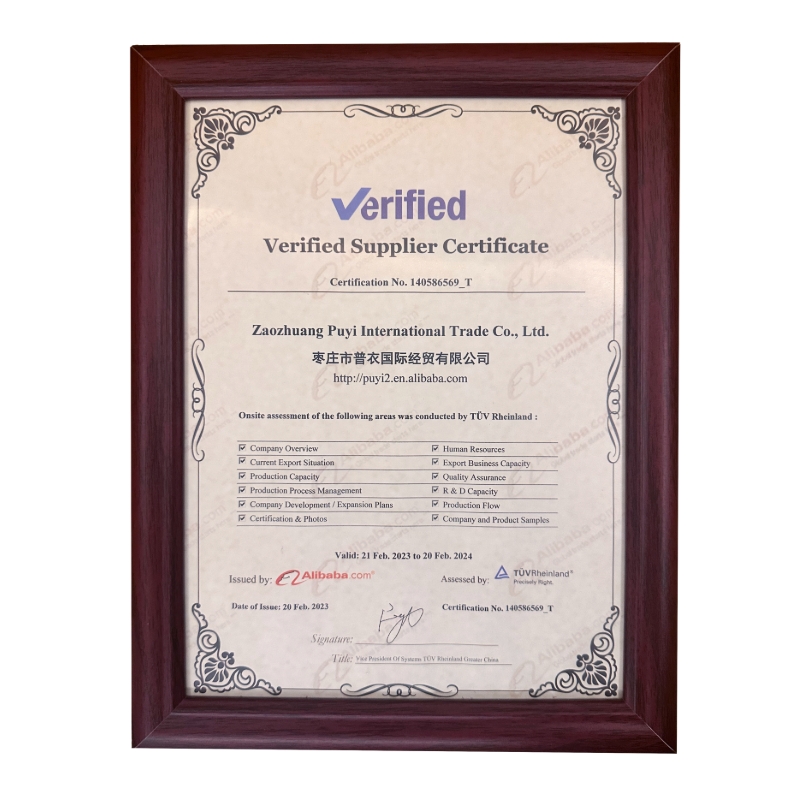
Importing second-hand goods across African borders requires strict compliance with international biosecurity, customs valuation, and fumigation standards. KingAAA provides 100% verified export documentation for seamless destination port clearance:

CSCA / ISO 9001
Standardized Sorting & Quality Management

SGS Verified Factory
International Third-Party Capacity Audit
Intertek Certified
Global Export Quality Compliance
Fumigation & Health
Official Disinfection & Port Clearance
8. Dual-Track Sourcing for African Wholesalers: Trial Bales vs. Full Containers
In the professional china-africa second hand clothing trade, KingAAA supports both emerging retailers and large-scale market distributors through our flexible dual-track ordering structure:
- Track 1: Trial Bales (45kg, 55kg, 80kg, 100kg): Evaluate fabric quality, cleanliness, and local resale speed with low initial capital. Custom outer poly-wrap and logo printing are available on demand.
- Track 2: 40ft HQ Mixed Full Container (FCL): Maximize shipping economics with a custom container load (e.g., 60% tropical summer clothes + 30% Grade A shoes + 10% bags) totaling 28.5 to 29.0 metric tons.
👑 Pan-African Trust & Direct Factory Supply
Founded by Nigerian Honorary Chief Guo Song
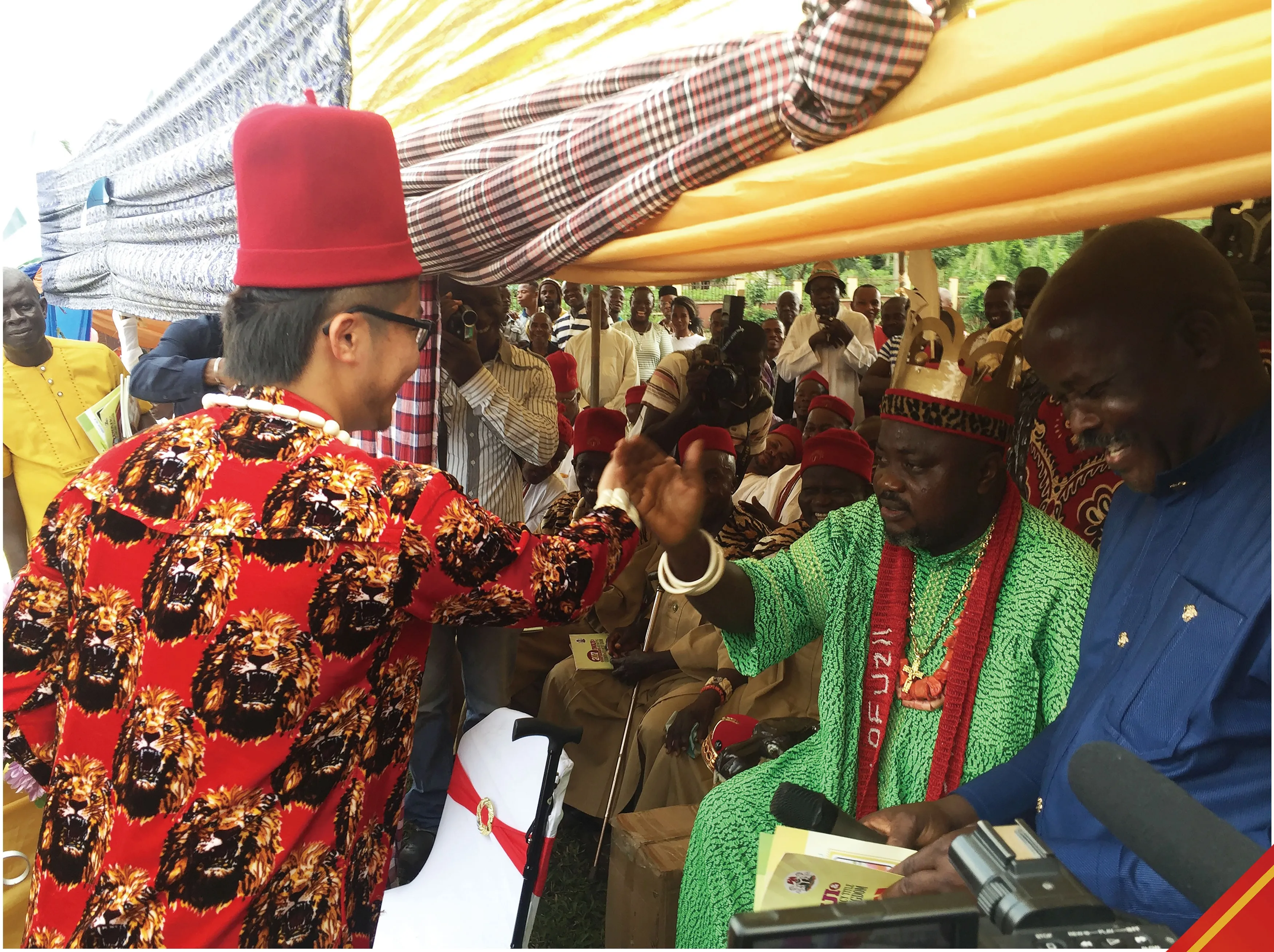
Unlike trading middlemen, KINGAAA is led by Mr. Guo Song, crowned Nigeria’s honorary chief in 2017 for fostering local employment and transparent used clothing supply chains across Africa.
Read Chief Guo Song’s Full Nigerian Story & Factory Mission →
9. Frequently Asked Questions (FAQ)
Q1: How does FOCAC zero-tariff policy affect used clothing imports from China?
Under FOCAC agreements, bilateral trade processes and electronic document exchanges between China and African customs are significantly accelerated, reducing port demurrage risks and administrative overhead for African importers.
Q2: Can I request a live video factory inspection before container loading?
Yes. We offer 1-on-1 live HD video factory tours over WhatsApp or WeChat, allowing you to inspect real-time sorting lines, bale pressing, and container sealing at our Guangzhou super-factory.
Q3: What documents are provided for customs clearance in Africa?
Every shipment includes an original Bill of Lading (B/L), Commercial Invoice, Detailed Packing List, Certificate of Origin (C/O), Official Fumigation & Health Certificate, and SGS / Intertek verification reports.