Why Grading Matters in the Used Cloth
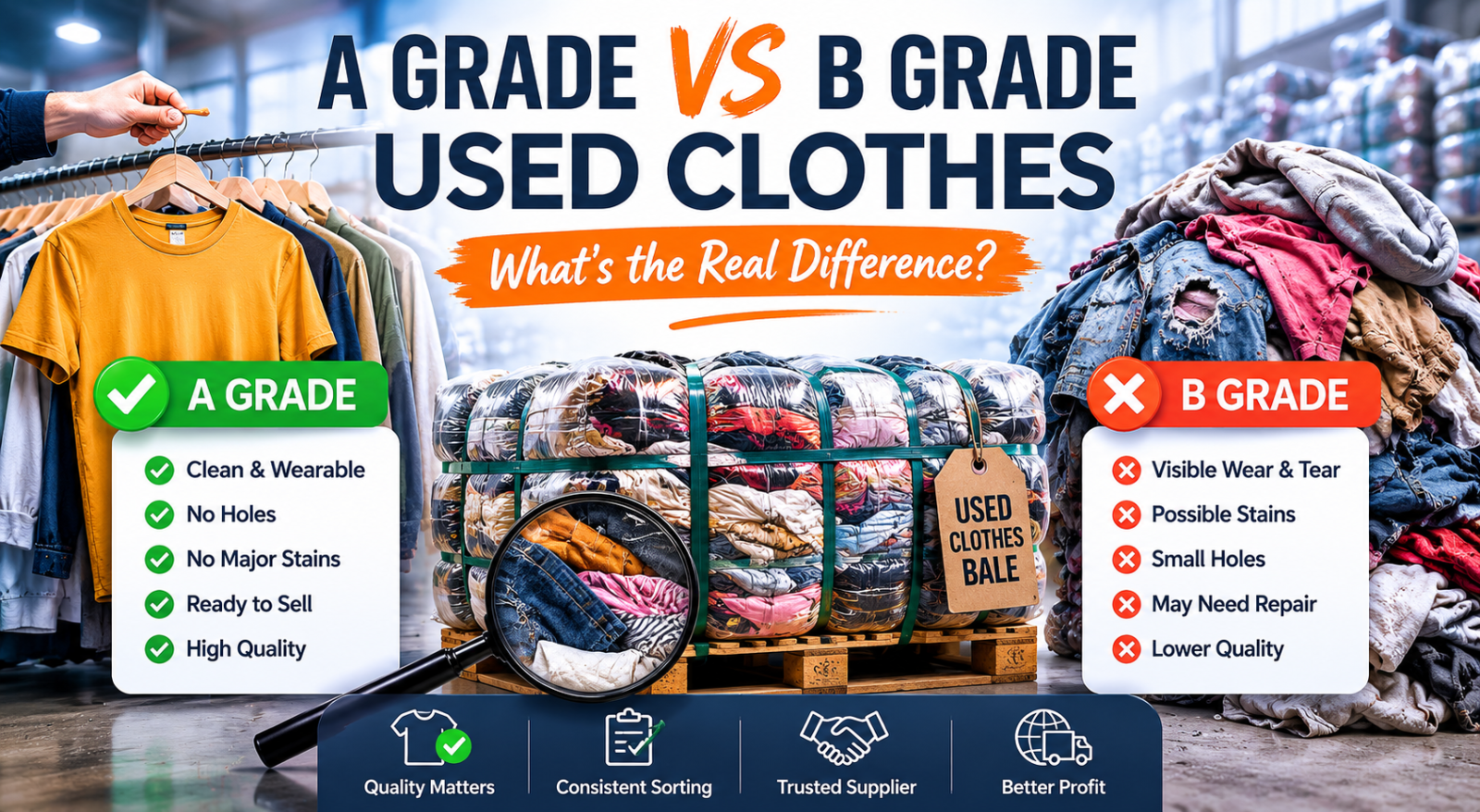
If you are importing second-hand clothing, understanding the difference between A grade vs B grade used clothes is not optional — it directly determines your profit, customer satisfaction, and long-term business success.
Unlike standardized industries, the global used clothing trade has no universal grading system. Most classifications are based on internal sorting rules used by suppliers.
👉 That’s why many importers face
- “A grade” shipments containing poor-quality items
- Inconsistent bale quality
- High rejection rates in local markets
This guide will break down the real differences, industry practices, and how to avoid costly mistakes.
Table of Contents
1. A Grade vs B Grade Used Clothes (Clear Comparison)
📊 Industry Comparison Table
| Criteria | A Grade Used Clothes | B Grade Used Clothes |
|---|---|---|
| Condition | Ver | Visible wear |
| Stains | None | Possible sta |
| Dama | No holes | May h |
| Repa | No | Sometimes |
| Brand Ratio | Medium to high | Low |
| Re | Yes | No |
| Marke | Urban | Lo |
| Profit Margin | High | Medium / low |
👉 Key Insight:
A Grade = ready-to-sell
B Grade = needs sorting or discount selling
2. What “A Grade” Really Means (Industry Reality)
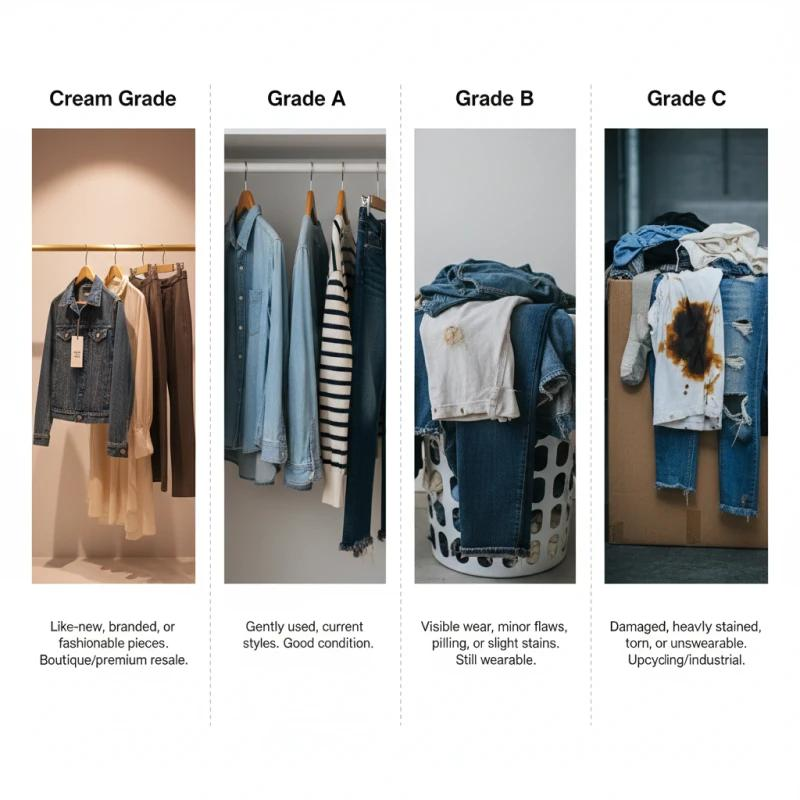
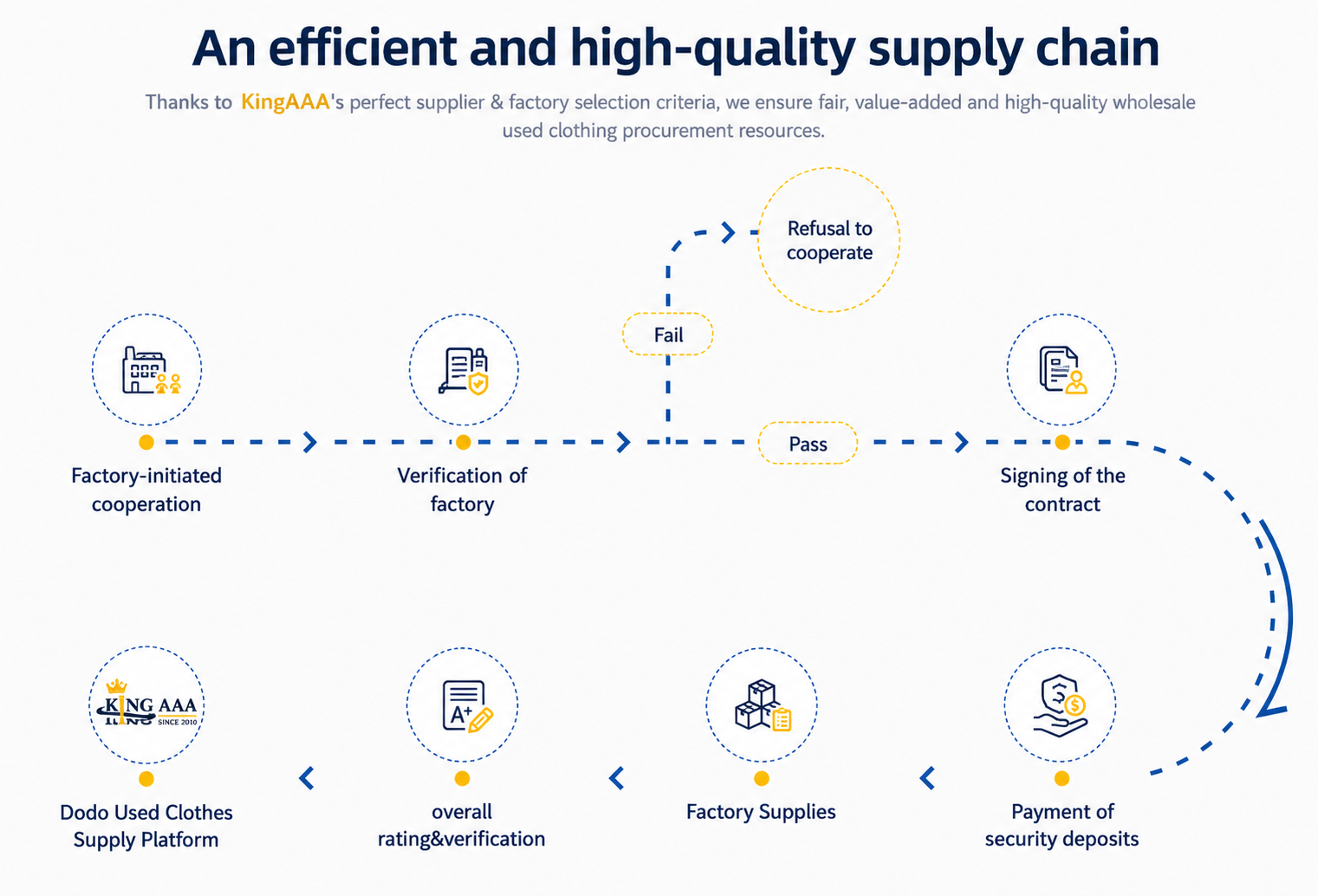
In most professional sorting facilities, A grade includes:
- Clean garments
- No major stains
- No holes or broken zippers
- Good overall appearance
However, here is the truth most suppliers won’t tell you:
👉 A Grade is not 100% perfect
Industry norm:
- 5%–10% B-grade items may still be mixed in
👉 This is considered “acceptable” in bulk trade.
3. What “B Grade” Actually Includes
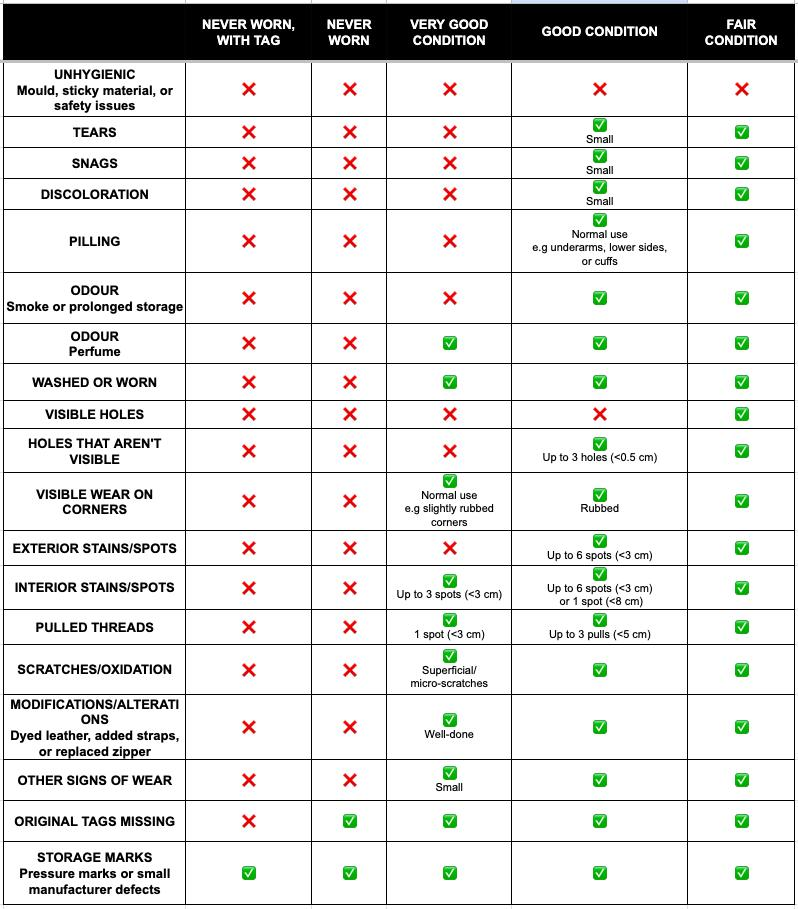
B grade clothing typically includes:
- Visible stains
- Small holes or tears
- Faded colors
- Missing buttons or minor defects
These items are:
- Sold at lower prices
- Often repaired or resold cheaply
- Popular in price-sensitive markets
4. How Used Clothing Is Sorted (Grading Process)
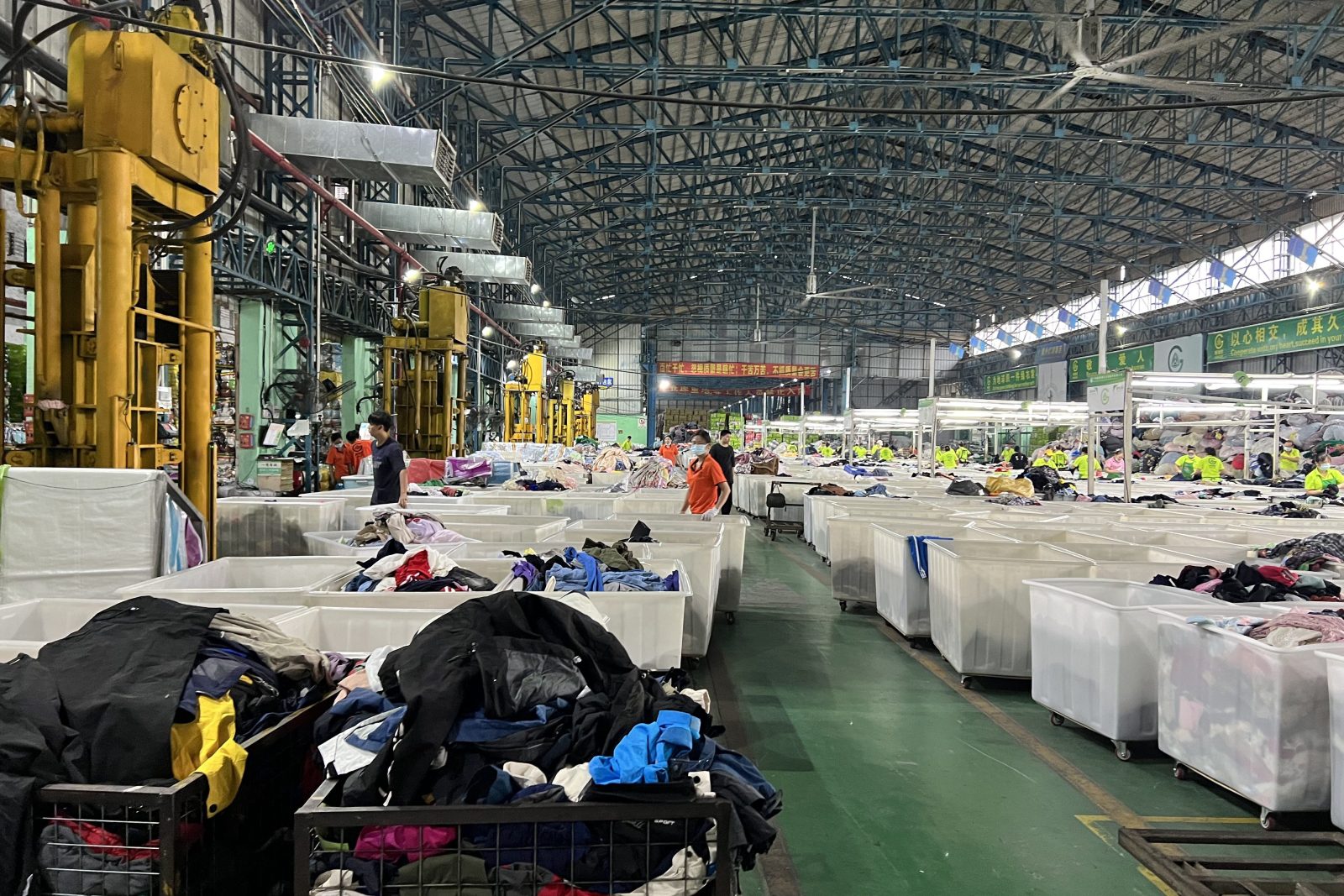
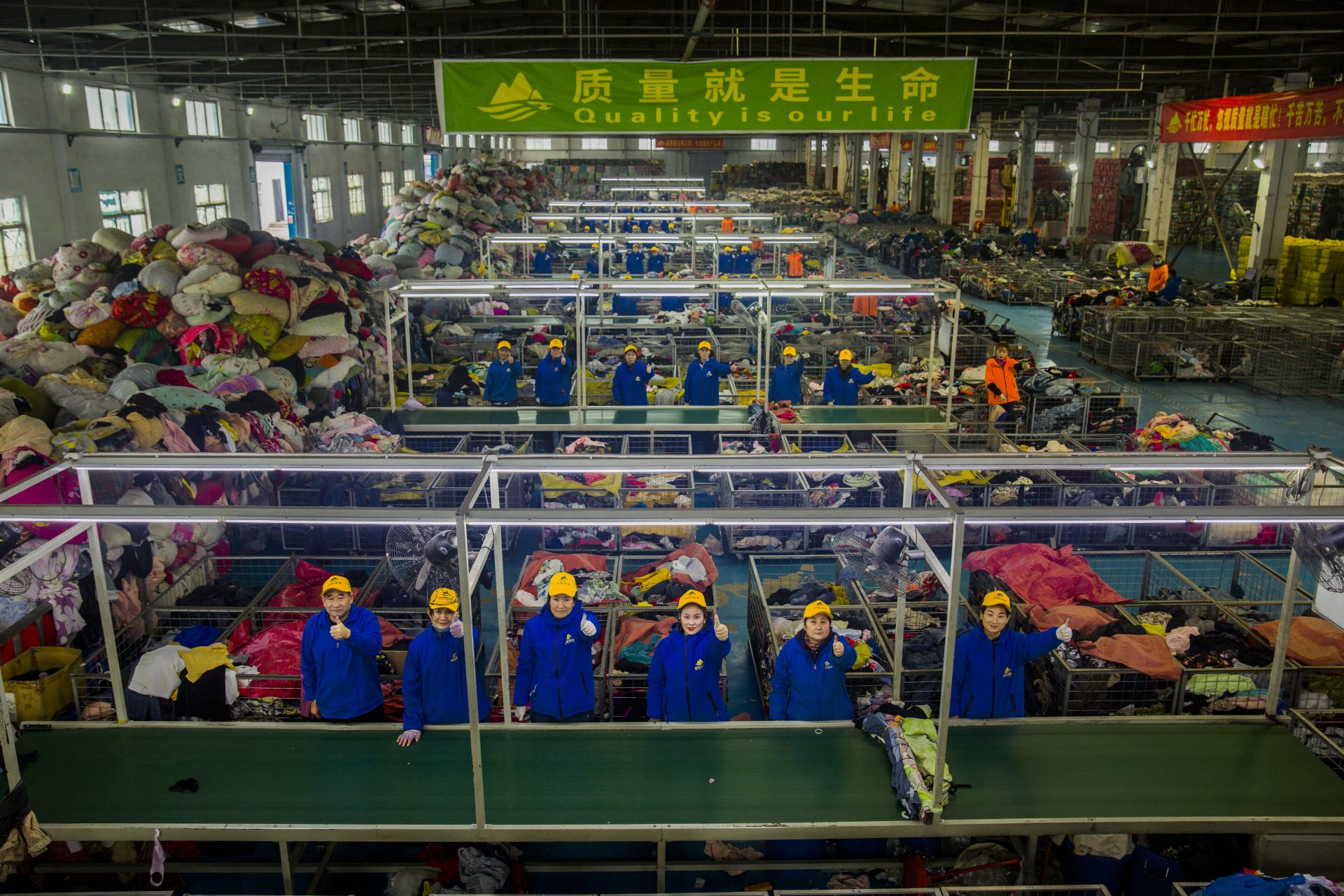
Typical sorting process:
- Collection (US / Europe / Japan)
- Initial screening (remove waste)
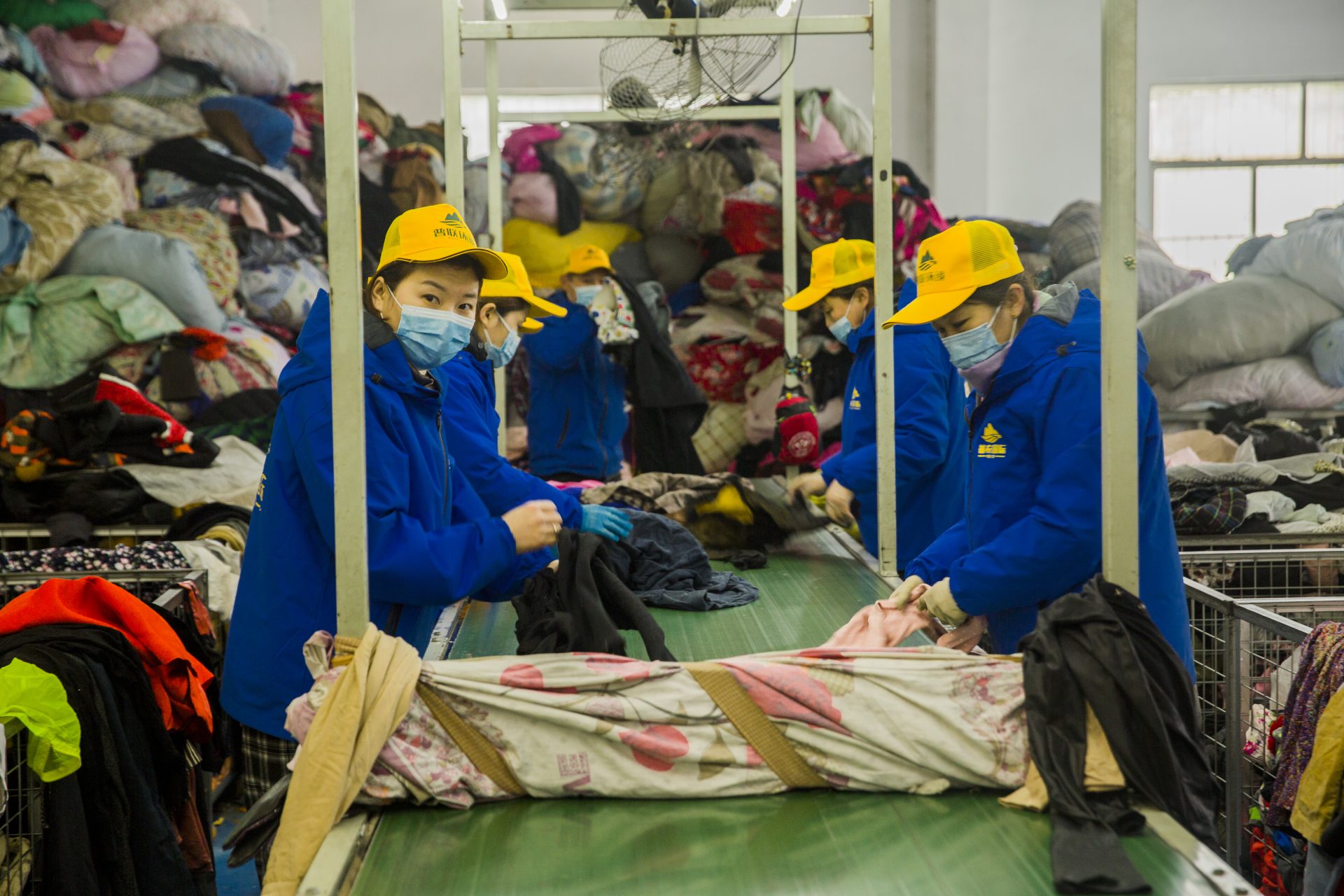
- Manual grading by workers
- Category sorting (shirts, jeans, jackets, etc.)
- Packing into bales
👉 Important:
Sorting is manual, not automated.
Which means:
👉 Quality depends heavily on the factory.
5. Bale Structure Explained (Very Important)
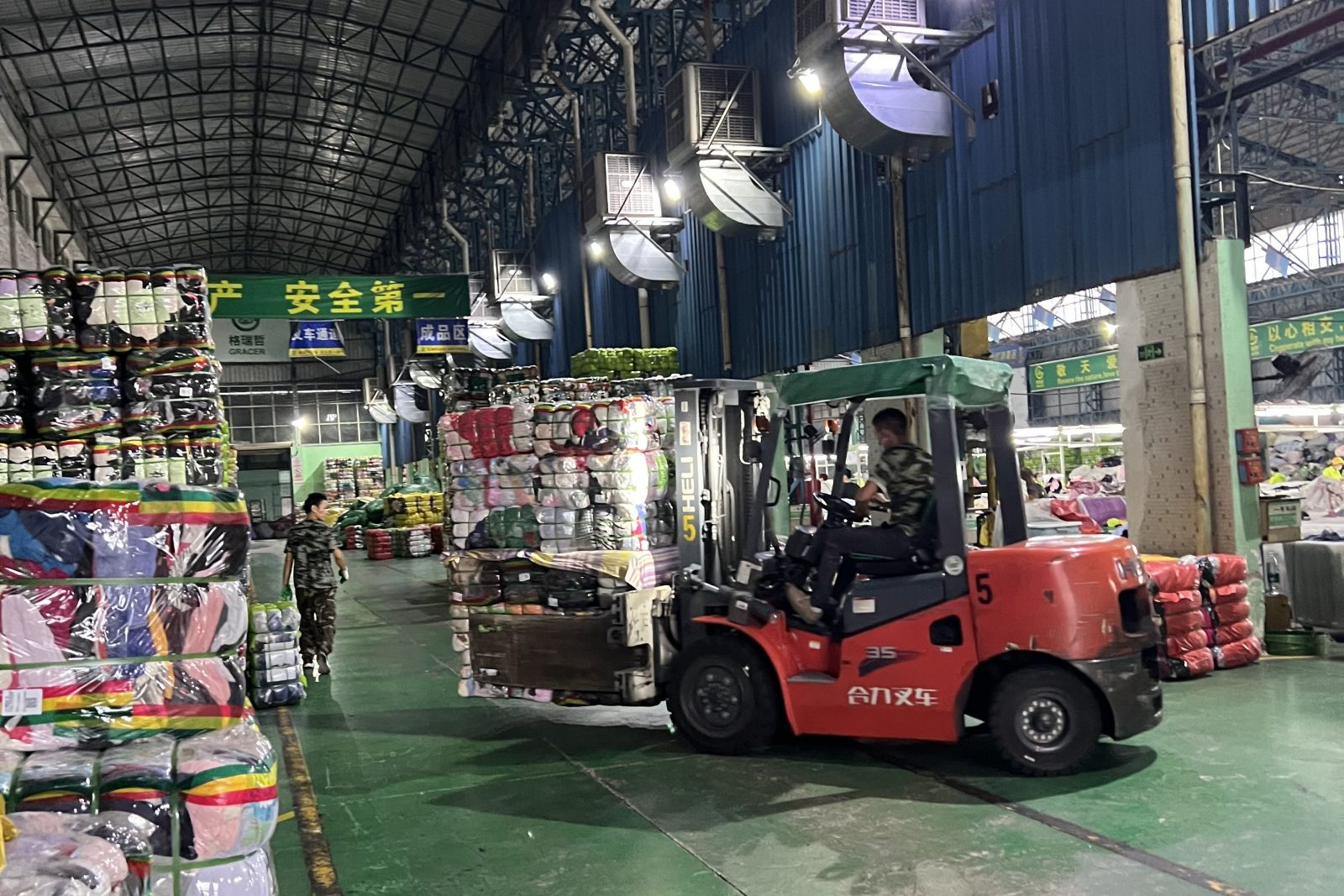
A standard used clothing bale:
- Weight: 45kg – 100kg
- Contains: mixed garments
- Packed under compression
Inside a bale:
- Top layer → usually better items
- Middle → mixed quality
- Bottom → heavier / lower-value pieces
👉 This is why:
Even A grade bales are not 100% uniform
6. Which Grade Is Better for Your Market?
A Grade Is Best If:
- You sell in urban markets
- Your customers want quality
- You target boutiques or resellers
B Grade Is Better If:
- You sell in rural or low-income markets
- You focus on volume
- You have repair or sorting capability
👉 Smart importers often mix both.
7. Biggest Mistakes Importers Make
❌ Mistake 1: Trusting “100% A Grade”
👉 Reality:
No supplier can guarantee absolute perfection.
❌ Mistake 2: Ignoring Bale Consistency
Two suppliers offering “A grade” may deliver completely different quality.
❌ Mistake 3: Buying Only Based on Price
Cheaper bales often mean:
- Higher defect rate
- Lower resale value
❌ Mistake 4: Not Testing Before Scaling
Always start with:
- Sample orders
- Small containers
8. Pro Strategy: Build Your Own Grading Standard
Professional importers don’t rely on supplier definitions.
They create their own:
Example:
A+ Grade
- 95% resale-ready
- Branded items
- No defects
A Grade
- Minor wear acceptable
B Grade
- Repairable items
👉 This gives you:
- Better supplier control
- Clear expectations
- Stronger brand positioning
9. Final Verdict: A Grade vs B Grade Used Clothes
👉 A Grade wins in quality and profit
👉 B Grade wins in price and accessibility
But the real answer is:
👉 The best strategy is combining both
📩 Looking for Consistent A Grade Used Clothing?
We supply:
- Stable A grade bales
- Strict quality control
- Custom grading options
- Export to Africa & Middle East
👉 Contact us today for bale details and pricing.
What Does A Grade Used Clothing Really Mean?
You can read this article《A Grade Used Clothing Really Mean》